



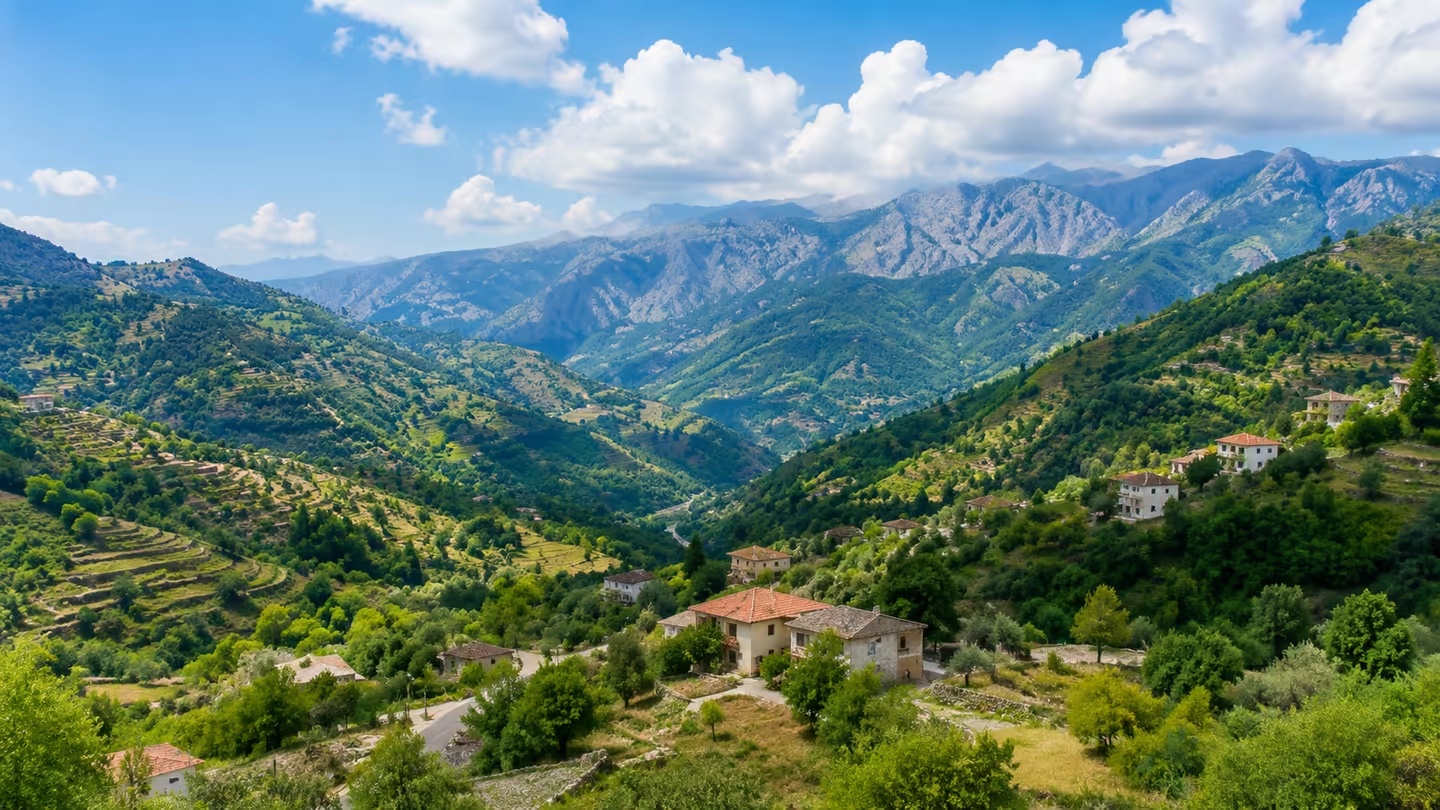
The Latakia mountains combine villages, forested slopes, agricultural products, changing weather and access to coastal heritage. The landscape is beautiful, but responsible planning must account for mountain roads, fog, privacy, fire risk and the limits of local services.
Make a safety decision before booking
A strong trip begins with a decision gate, not with a list of attractions. Define who is travelling, the health and mobility needs of the group, the maximum driving time, the amount of money you can lose if plans change, and the conditions that will make you postpone. This protects the group from pressure to continue when the facts no longer support the original plan.
Build time buffers. A short, calm programme is usually better than a rushed day with too many stops. Plan water, food, fuel, phone charging, toilets, shade and rest before adding optional attractions. Agree on a meeting point and a return time, and make sure every traveller has essential contact information.
Verify access and local conditions
Ask for recent, specific information. A useful answer includes the date, the person who checked, the exact service or site, opening hours, payment method and a second option. A photo or social post without a date is inspiration, not verification. Keep screenshots of confirmed bookings and share the route and return time with somebody who is not travelling.
For families, older travellers and visitors with disabilities, ask about walking surfaces, steps, shade, seating and accessible toilets. Do not assume that a map reflects current conditions. If the main experience depends on difficult walking, create a shorter version so nobody is forced to choose between safety and participation.
Choose the right season and time of day
For further research on this topic, you can also explore Event.
Responsible tourism means treating heritage and communities as living places. Use authorised entrances, respect barriers, avoid climbing or touching fragile structures, ask before photographing people and never buy objects that may be archaeological or illegally removed. Spend with local guides, family businesses, transport providers and craftspeople who can explain their work and prices clearly.
Tourism can support local recovery when money reaches real work. Ask what is included in the price, pay fairly, keep receipts for larger services and avoid last-minute bargaining that transfers all risk to a small operator. A good local provider explains limitations rather than promising that everything is possible.
Build a realistic itinerary
Build time buffers. A short, calm programme is usually better than a rushed day with too many stops. Plan water, food, fuel, phone charging, toilets, shade and rest before adding optional attractions. Agree on a meeting point and a return time, and make sure every traveller has essential contact information.
Photography should not interrupt worship, work, privacy or conservation. Check rules for tripods, professional equipment and drones. Drone use may be restricted or unsafe; do not launch one without explicit current permission. Back up images after the trip and avoid publishing precise sensitive locations when that could create risk.
Understand the place before photographing it
For families, older travellers and visitors with disabilities, ask about walking surfaces, steps, shade, seating and accessible toilets. Do not assume that a map reflects current conditions. If the main experience depends on difficult walking, create a shorter version so nobody is forced to choose between safety and participation.
Prepare an emergency plan: two contacts, a charged phone and power bank, basic first aid, required medicines, drinking water, a vehicle check and a clear turnaround time. If information becomes contradictory, visibility worsens, a checkpoint or local authority advises against continuing, or a member of the group becomes unwell, stop and reassess.
Choose a trustworthy local guide
Tourism can support local recovery when money reaches real work. Ask what is included in the price, pay fairly, keep receipts for larger services and avoid last-minute bargaining that transfers all risk to a small operator. A good local provider explains limitations rather than promising that everything is possible.
A strong trip begins with a decision gate, not with a list of attractions. Define who is travelling, the health and mobility needs of the group, the maximum driving time, the amount of money you can lose if plans change, and the conditions that will make you postpone. This protects the group from pressure to continue when the facts no longer support the original plan.
Transport, fuel and vehicle checks
Photography should not interrupt worship, work, privacy or conservation. Check rules for tripods, professional equipment and drones. Drone use may be restricted or unsafe; do not launch one without explicit current permission. Back up images after the trip and avoid publishing precise sensitive locations when that could create risk.
Ask for recent, specific information. A useful answer includes the date, the person who checked, the exact service or site, opening hours, payment method and a second option. A photo or social post without a date is inspiration, not verification. Keep screenshots of confirmed bookings and share the route and return time with somebody who is not travelling.
Water, health and rest
Prepare an emergency plan: two contacts, a charged phone and power bank, basic first aid, required medicines, drinking water, a vehicle check and a clear turnaround time. If information becomes contradictory, visibility worsens, a checkpoint or local authority advises against continuing, or a member of the group becomes unwell, stop and reassess.
Responsible tourism means treating heritage and communities as living places. Use authorised entrances, respect barriers, avoid climbing or touching fragile structures, ask before photographing people and never buy objects that may be archaeological or illegally removed. Spend with local guides, family businesses, transport providers and craftspeople who can explain their work and prices clearly.
Money, phones and backup information
A strong trip begins with a decision gate, not with a list of attractions. Define who is travelling, the health and mobility needs of the group, the maximum driving time, the amount of money you can lose if plans change, and the conditions that will make you postpone. This protects the group from pressure to continue when the facts no longer support the original plan.
Build time buffers. A short, calm programme is usually better than a rushed day with too many stops. Plan water, food, fuel, phone charging, toilets, shade and rest before adding optional attractions. Agree on a meeting point and a return time, and make sure every traveller has essential contact information.
Photography, privacy and drones
Ask for recent, specific information. A useful answer includes the date, the person who checked, the exact service or site, opening hours, payment method and a second option. A photo or social post without a date is inspiration, not verification. Keep screenshots of confirmed bookings and share the route and return time with somebody who is not travelling.
For families, older travellers and visitors with disabilities, ask about walking surfaces, steps, shade, seating and accessible toilets. Do not assume that a map reflects current conditions. If the main experience depends on difficult walking, create a shorter version so nobody is forced to choose between safety and participation.
Families and different mobility needs
Responsible tourism means treating heritage and communities as living places. Use authorised entrances, respect barriers, avoid climbing or touching fragile structures, ask before photographing people and never buy objects that may be archaeological or illegally removed. Spend with local guides, family businesses, transport providers and craftspeople who can explain their work and prices clearly.
Tourism can support local recovery when money reaches real work. Ask what is included in the price, pay fairly, keep receipts for larger services and avoid last-minute bargaining that transfers all risk to a small operator. A good local provider explains limitations rather than promising that everything is possible.
Support local livelihoods fairly
Build time buffers. A short, calm programme is usually better than a rushed day with too many stops. Plan water, food, fuel, phone charging, toilets, shade and rest before adding optional attractions. Agree on a meeting point and a return time, and make sure every traveller has essential contact information.
Photography should not interrupt worship, work, privacy or conservation. Check rules for tripods, professional equipment and drones. Drone use may be restricted or unsafe; do not launch one without explicit current permission. Back up images after the trip and avoid publishing precise sensitive locations when that could create risk.
Protect heritage and nature
For families, older travellers and visitors with disabilities, ask about walking surfaces, steps, shade, seating and accessible toilets. Do not assume that a map reflects current conditions. If the main experience depends on difficult walking, create a shorter version so nobody is forced to choose between safety and participation.
Prepare an emergency plan: two contacts, a charged phone and power bank, basic first aid, required medicines, drinking water, a vehicle check and a clear turnaround time. If information becomes contradictory, visibility worsens, a checkpoint or local authority advises against continuing, or a member of the group becomes unwell, stop and reassess.
Prepare an emergency and turnaround plan
Tourism can support local recovery when money reaches real work. Ask what is included in the price, pay fairly, keep receipts for larger services and avoid last-minute bargaining that transfers all risk to a small operator. A good local provider explains limitations rather than promising that everything is possible.
A strong trip begins with a decision gate, not with a list of attractions. Define who is travelling, the health and mobility needs of the group, the maximum driving time, the amount of money you can lose if plans change, and the conditions that will make you postpone. This protects the group from pressure to continue when the facts no longer support the original plan.
Know when to postpone
Photography should not interrupt worship, work, privacy or conservation. Check rules for tripods, professional equipment and drones. Drone use may be restricted or unsafe; do not launch one without explicit current permission. Back up images after the trip and avoid publishing precise sensitive locations when that could create risk.
Ask for recent, specific information. A useful answer includes the date, the person who checked, the exact service or site, opening hours, payment method and a second option. A photo or social post without a date is inspiration, not verification. Keep screenshots of confirmed bookings and share the route and return time with somebody who is not travelling.
Share accurate information after the trip
Prepare an emergency plan: two contacts, a charged phone and power bank, basic first aid, required medicines, drinking water, a vehicle check and a clear turnaround time. If information becomes contradictory, visibility worsens, a checkpoint or local authority advises against continuing, or a member of the group becomes unwell, stop and reassess.
Responsible tourism means treating heritage and communities as living places. Use authorised entrances, respect barriers, avoid climbing or touching fragile structures, ask before photographing people and never buy objects that may be archaeological or illegally removed. Spend with local guides, family businesses, transport providers and craftspeople who can explain their work and prices clearly.
Internal links
Official sources
- اليونسكو: قلعة الحصن وقلعة صلاح الدين
- اليونسكو: أوغاريت على القائمة التمهيدية
- اليونسكو: جزيرة أرواد على القائمة التمهيدية
- اليونسكو: التراث الثقافي غير المادي في سوريا
- نصائح السفر إلى سوريا – الحكومة البريطانية
- تحذير السفر إلى سوريا – وزارة الخارجية الأميركية
Conclusion
The best journey is not the one that covers the greatest distance. It is the one that respects the place, supports local livelihoods, keeps the group safe and leaves enough time to understand what you are seeing.
This is general information and may change as new decisions are issued. Check official sources or a qualified professional before legal or financial decisions.



Comments (0)
Sign in to rate, like and comment.