



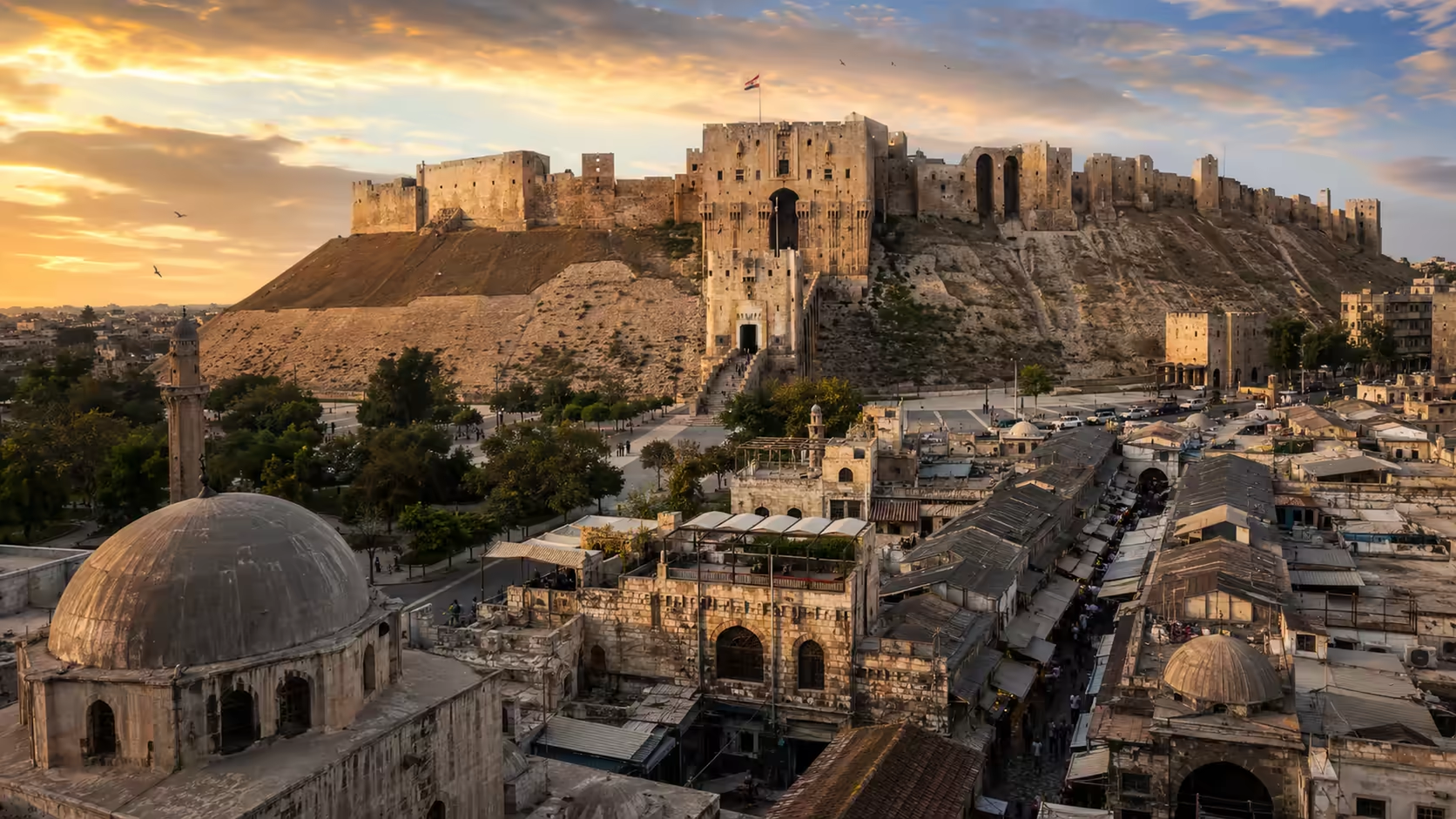
Aleppo offers one of Syria’s richest urban travel experiences. The citadel dominates the skyline, but the city’s real character appears through its covered souqs, khans, historic neighbourhoods, religious landmarks, crafts and celebrated food culture. A thoughtful visit is not only about seeing monuments; it is about understanding how trade, memory and daily life shaped the city.
Important: Access, opening hours, transport and local conditions may change. Confirm current information locally before travelling and follow all official instructions.
1. Why Aleppo deserves more than a quick visit
Aleppo is not a single-attraction destination. Its importance comes from the relationship between the citadel, the old city, the markets, residential quarters and the modern city around them. Each part explains another layer of Aleppo’s history as a commercial and cultural centre.
Visitors who rush from one photo stop to another miss the strongest part of the experience: walking slowly, noticing stonework and shopfronts, listening to local stories and allowing time for food, conversation and unexpected discoveries.
2. Aleppo Citadel
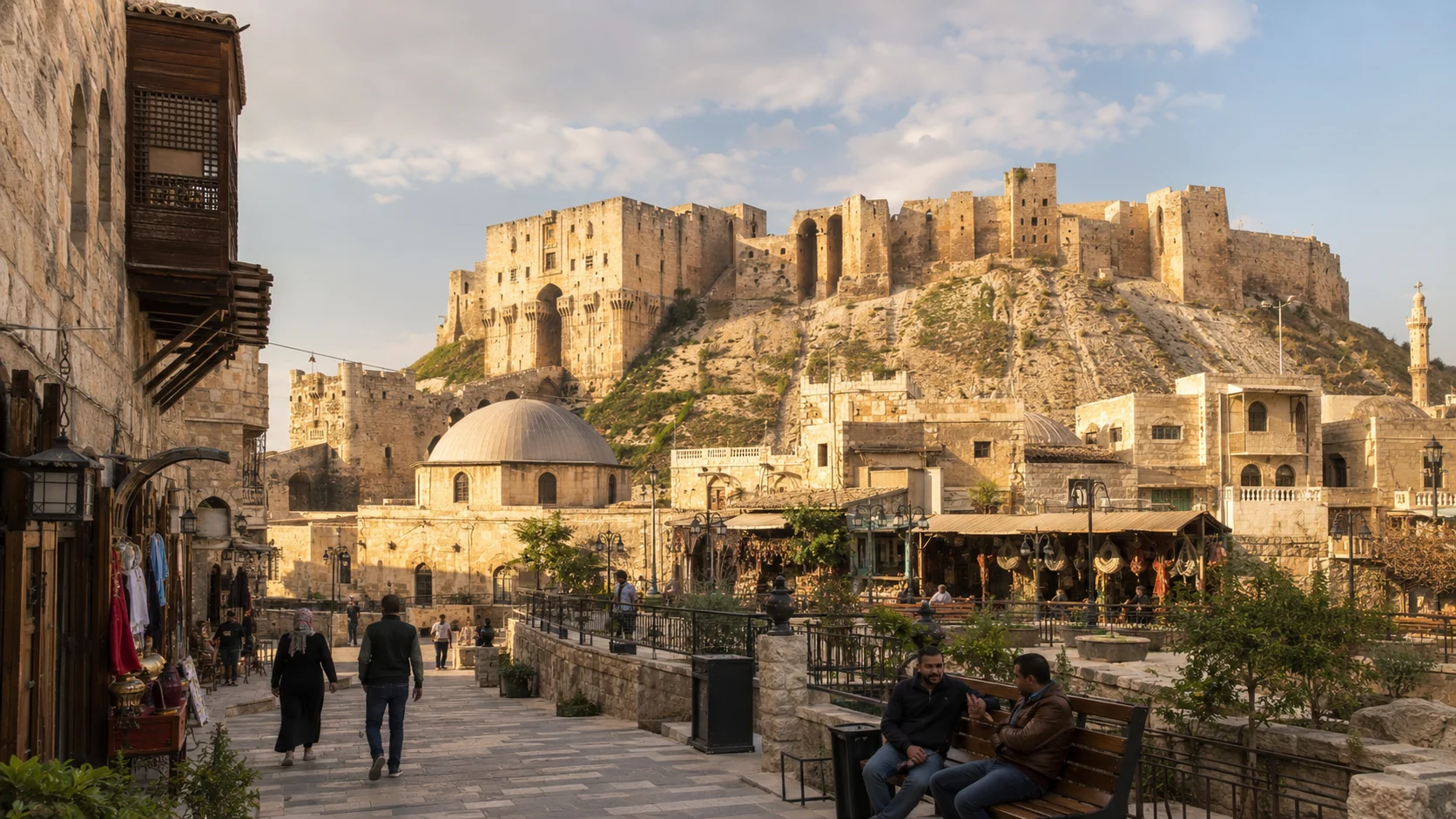
The citadel is the city’s most recognisable landmark and an excellent starting point. Its elevated position helps visitors understand the urban geography below. The entrance, defensive structures and panoramic views reveal why the site held strategic importance for centuries.
Give the citadel enough time. Read available information, follow open routes and avoid restricted or restoration areas. Even when access to some sections is limited, viewing the monument from different points around the old city remains worthwhile.
3. The old souqs and khans
For further research on this topic, you can also explore Event, Service, Business opportunity.
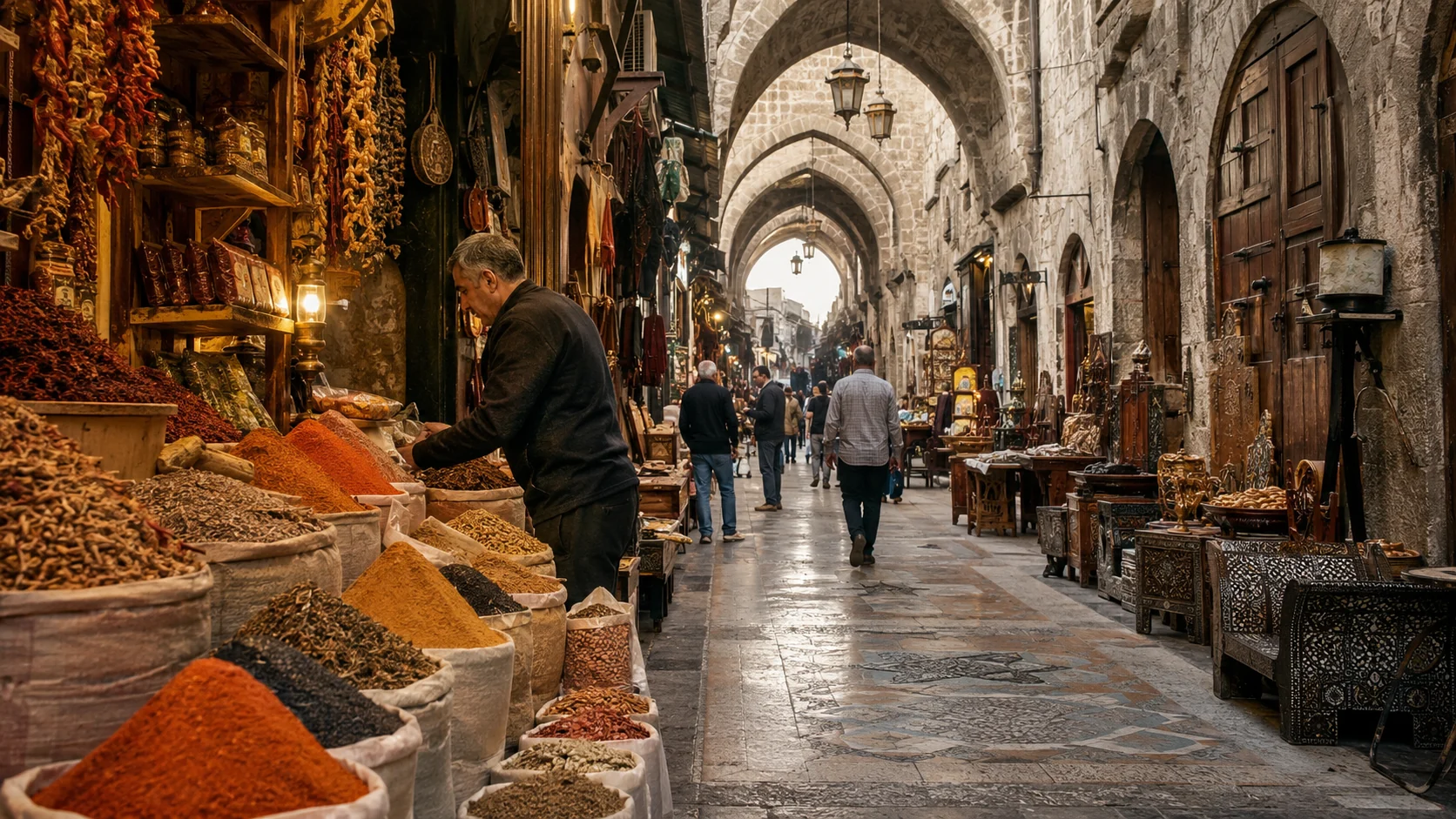
Aleppo’s markets explain the city’s commercial identity better than any short description. The covered lanes and historic khans once connected merchants, artisans, travellers and goods moving across a much wider region. Their structure shows how trade, storage, accommodation and craft production worked together.
Do not treat the souqs only as shopping areas. Look at the architecture, ask respectful questions about surviving crafts and support local businesses when products and prices are clear. Buying from active workshops and established shops can help preserve skills as well as livelihoods.
4. Al-Jdeideh, Al-Jalloum and historic neighbourhoods
Neighbourhoods around the old city reveal Aleppo’s diversity. Al-Jdeideh is known for historic houses, churches and distinctive urban character, while Al-Jalloum connects strongly with the commercial fabric surrounding the markets. Moving between these areas creates a fuller picture than visiting the citadel alone.
These districts are best explored at a comfortable walking pace. Respect homes, places of worship and private spaces. Ask permission before photographing people, and remember that many historic streets remain living neighbourhoods rather than open-air museums.
5. Aleppo’s food culture
Aleppian cuisine is central to the city’s identity. Kebbeh, stuffed dishes, grilled meats, pastries, sweets and carefully balanced spices reflect a long culinary tradition. Food can become one of the most memorable parts of the journey when it is approached with curiosity rather than as a checklist.
Choose clean, reputable establishments and ask local residents for current recommendations. Families and visitors with dietary needs should confirm ingredients and portion sizes. A good plan combines one substantial meal with lighter tastings instead of trying everything at once.
6. A practical two-day itinerary
Day one: begin at the citadel and its surroundings, continue through accessible sections of the old souqs, take a lunch break, and finish with a walk through a nearby historic quarter. This gives a clear introduction to Aleppo’s main urban layers.
Day two: return to selected markets and khans, visit available cultural or religious landmarks, spend more time in Al-Jdeideh or another historic neighbourhood, and reserve space for a focused food experience and local shopping.
7. Photography and responsible travel
The best photographs often come from transitions: a view from stone alleys toward the citadel, light entering a covered market, a restored doorway or a working craft space. Avoid photographing sensitive sites, security locations or people without consent.
Responsible travel means recognising that restoration and recovery are ongoing. Do not reduce Aleppo to damage or nostalgia. Present the city as a living place with businesses, families, students and cultural life.
8. Budget, transport and timing
Other useful resources related to this guide include Partnership, Investment.
Plan transport in advance and allow extra time for traffic and route changes. Walking is essential in the historic core, so comfortable footwear, water and seasonal clothing matter. Morning and late afternoon are usually easier for long walks and photography than the hottest part of the day.
Keep a flexible budget for transport, entrance fees where applicable, meals, guides and purchases. Confirm prices before accepting services and keep important documents and valuables secure.
9. Supporting the local economy
A visit can support drivers, guides, restaurants, small shops, artisans and accommodation providers. Prefer clear, locally operated services and avoid buying objects of uncertain historical origin. Cultural heritage should never be removed or traded illegally.
Thoughtful spending has more value than rushed consumption. One quality purchase from a genuine workshop can be more meaningful than many generic souvenirs.
10. Final perspective
Aleppo rewards patience. Its citadel is powerful, but the city’s deeper value lies in the connection between history, commerce, neighbourhood life, cuisine and recovery. A respectful two- or three-day visit allows these elements to come together.
Verify current conditions, travel responsibly and leave enough time for the city to surprise you. Aleppo is not simply a memory of the past; it is a living Syrian city whose story continues every day.
This is general information and may change as new decisions are issued. Check official sources or a qualified professional before legal or financial decisions.



Comments (0)
Sign in to rate, like and comment.