



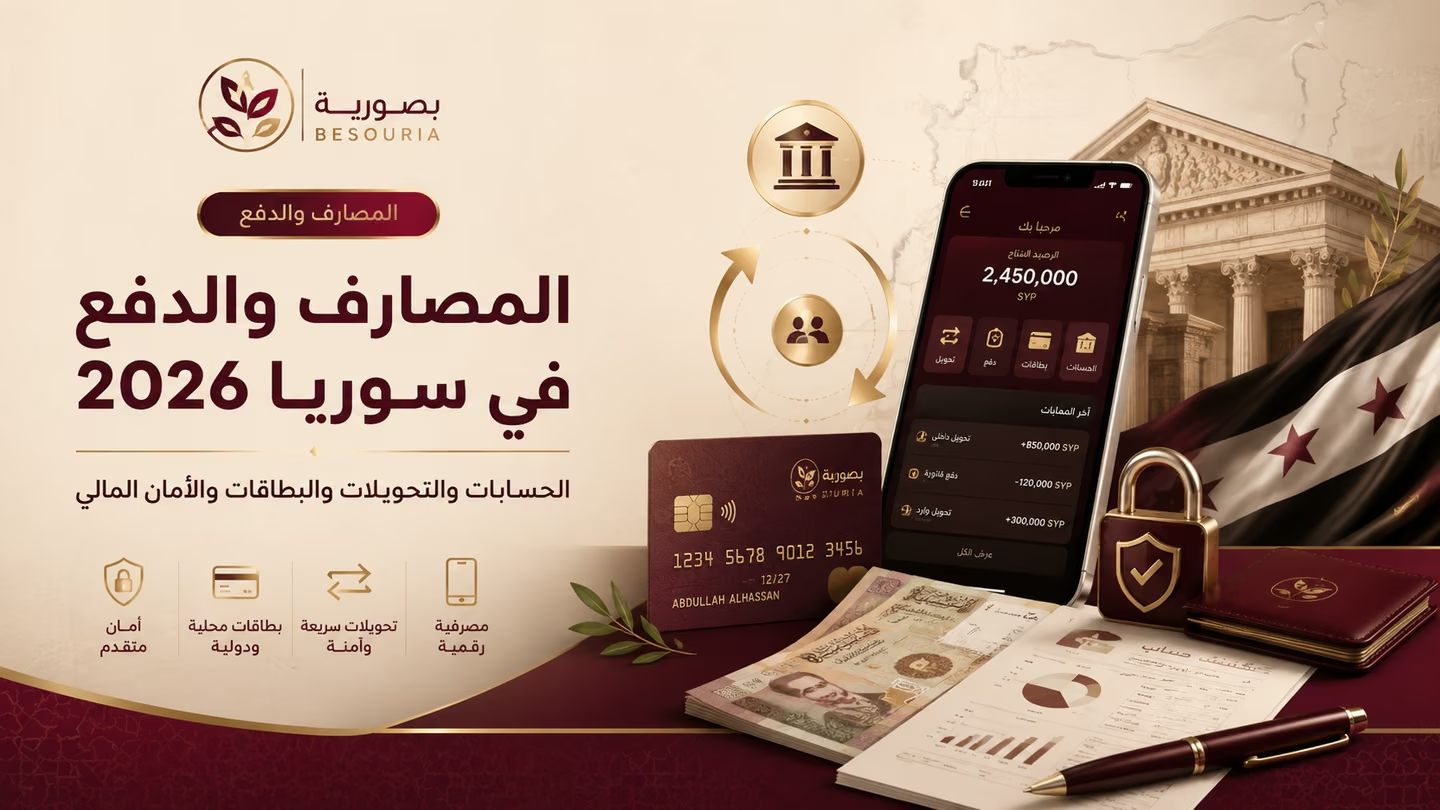
Syria’s financial infrastructure changed quickly in 2026: licensed banks and payment companies were allowed to work with global networks, international card acceptance began to appear, cash-in and cash-out points expanded, and some incoming remittances gained more currency choice. New technology, however, does not mean every card works everywhere, every transfer is instant or every fee and risk has disappeared. This guide explains how individuals and businesses can choose a channel, verify settlement, reconcile records and protect money.
What changed in 2026?
In May 2026 the Central Bank announced that licensed banks and electronic-payment companies could work with global networks such as Visa and Mastercard. International card acceptance and links to global infrastructure then began to roll out in phases. Mastercard reported completion of technical procedures for international card processing, while QNB announced card-acceptance and digital-payment services.
In June, beneficiaries of certain incoming international remittances were given the option to receive Syrian pounds or foreign currency, subject to the recipient’s choice and the delivering institution’s available capacity. These are meaningful steps, but users still need to confirm supported cards, acceptance points, currency, exchange rate, fees, limits and settlement timing.
Map the payment channels
| Channel | Common use | Verify |
|---|---|---|
| Cash | Small immediate payments | Count, denomination, receipt, safety and source |
| Bank account | Savings, salary, transfers and business | Account type, fees, limits, signatures and documents |
| Card | ATM and point-of-sale | Network, currency, limit, fee and activation |
| Wallet/payment company | Local transfers, bills and services | Licence, recipient identity, reversal and balance limit |
| Remittance | Domestic or cross-border receipt | Provider, matching name, currency, rate and commission |
| Commercial transfer | Supplier, customer, import or contract | Invoice, purpose, beneficial owner and compliance |
Open an account for the intended use
For further research on this topic, you can also explore Investment.

A personal account is not always a substitute for a business account. A company needs separation from owner money, clear signing authority and statements that reconcile with invoices and books. Ask about minimums, administration, transfer, withdrawal, digital access, cards, currencies, joint signatures and periodic data updates.
Why providers request documents
Banks and payment firms must understand the customer, purpose, source of funds and beneficial owner. Companies may need registration, articles, managers, authorised signers, ownership, licences, invoices and contracts. Maintain a current compliance file and review the company-formation guide and verification guide.
A transfer has several stages
- Instruction creation.
- Balance, identity and compliance checks.
- Acceptance and reference generation.
- Settlement between institutions.
- Funds becoming available to the recipient.
“Sent” may mean only that the instruction was accepted. Stronger proof is a posted entry in the recipient account or a verifiable confirmation from the receiving provider.
International remittances
Use the recipient’s exact legal name, confirm location, reference and currency, and do not post the reference publicly. Where currency choice exists, ask what amount will actually be paid, the fee, exchange rate and current availability.
Card acceptance is not universal operation
Ask whether the card is local or international, debit, credit or prepaid, and whether it works at ATMs, POS and online. Limits and fees may differ by transaction, issuer, acquirer and currency conversion.
Check the amount before entering a PIN. Never allow card photography or disclose security or one-time codes. After a failed transaction, review the balance and history before repeating it multiple times.
Wallets and payment companies
Use a licensed provider and official application source. Link a number you control, lock the device and keep the transaction reference. For a new recipient, confirm the displayed name and consider a small test transfer.
For merchants: verify in the system, not by screenshot
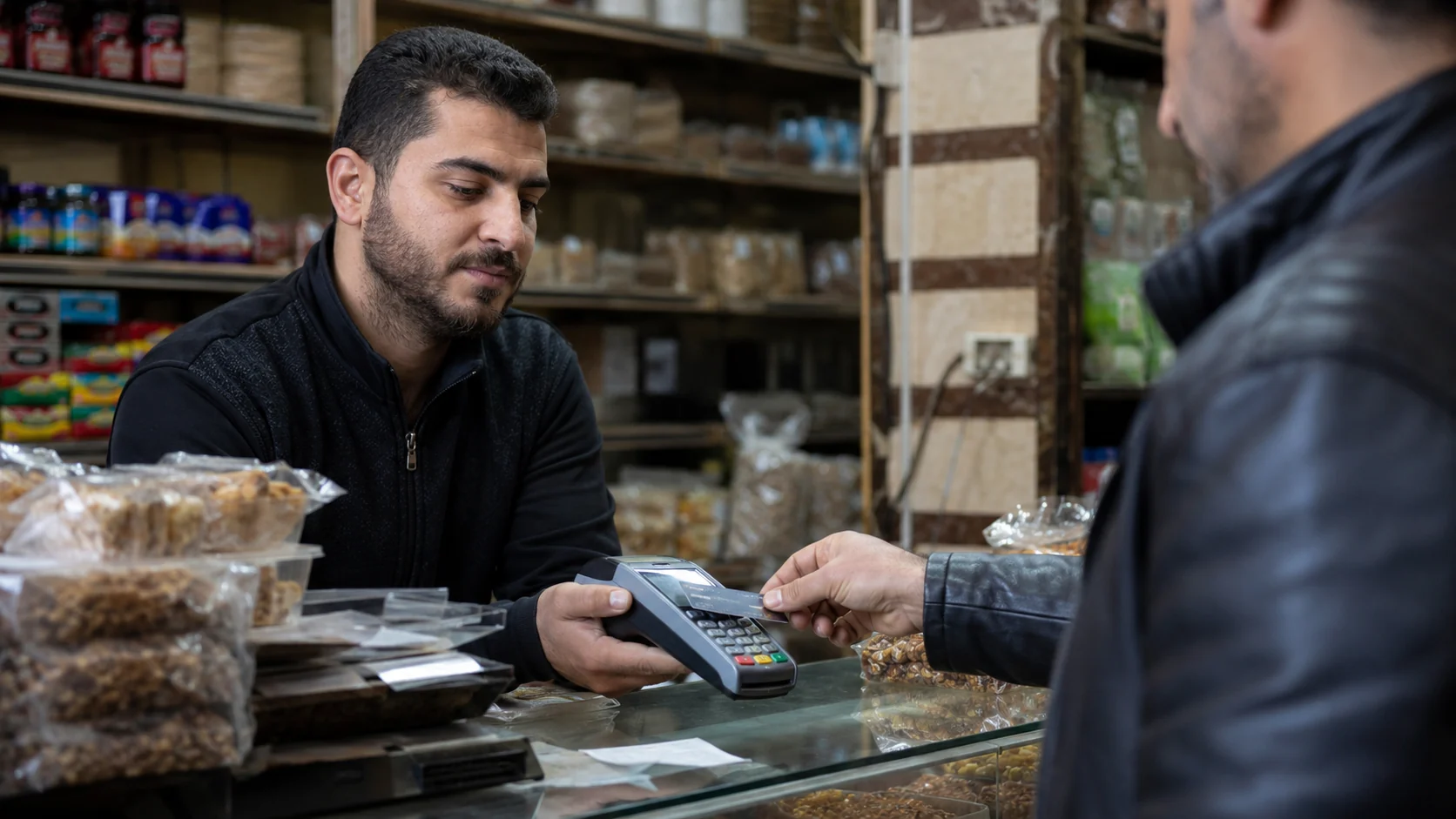
Connect every payment to an order, invoice, time, channel and reference. Reconcile POS or wallet reports with bank statements. Staff should know what to do with pending, duplicate, reversed and refunded transactions.
| Field | Purpose |
|---|---|
| Order number | Connects money to sale |
| Transaction reference | Supports tracing and dispute |
| Amount and currency | Prevents conversion errors |
| Fees | Explains gross-to-net difference |
| Settlement status | Separates pending from received |
| Availability date | Supports cash planning |
Read the total cost
The advertised commission may not be the full cost. There may be sending, receiving, withdrawal, POS, currency-conversion, intermediary-bank or exchange-rate costs. Ask for a numerical example showing what is debited and what the recipient receives.
Supplier and customer payments
Contracts should state account, currency, due date, fee responsibility and reference. Never change supplier bank details based on one email; confirm using a second channel with a known contact. Link trade payments to invoice, contract, shipping and documents, using the import-export guide.
Reconciliation finds errors
- Export each channel report for the same period.
- Match reference, amount and currency.
- Isolate unmatched items.
- Dispute within the applicable time.
- Document resolution and accounting entry.
Use layers of security
- Unique password and trusted password manager.
- Two-factor authentication where available.
- Never share a one-time code.
- Separate creation and approval rights in a business.
- Review alerts and statements.
- Update phone and email records.
- Use a dedicated device or profile for sensitive operations.
If fraud is suspected
Stop communication, do not send an additional “release” payment, contact the provider through an official number, change credentials from a safe device, preserve messages and references, and file a dispute or report quickly.
International payment compliance
Global-network access does not remove screening of parties, goods, banks and sanctions. A card purchase may work while a commercial transfer is rejected for missing documents or a restricted party. Ask the bank for required documents before signing the transaction.
Connect payment timing to cash flow
Record instruction date, debit date, settlement date and availability date. The fastest route is not always best if fees are excessive; the cheapest is not best if it delays the supplier. Use the project-finance guide for cash planning.
Before an important payment
- Recipient identity and account independently confirmed?
- Purpose, invoice and contract aligned?
- Currency, fee and exchange rate known?
- Licensed route with a dispute process?
- Internal approval complete?
- Reference supports reconciliation?
- Any sudden change or pressure?
Sources and updates
- Global payment networks decision
- Global-linked local payment network
- Mastercard technical connection
- QNB card and digital payment launch
- Incoming remittance currency options
- Central Bank strategy 2026–2030
- Expanded card cash-in and cash-out service
- World Bank financial and macro context
Frequently asked questions
Conclusion
A good payment is not merely a successful button. It is a verified identity, licensed channel, understood currency and fee, traceable reference, actual settlement and accounting reconciliation. Digital convenience increases the importance of access controls, code protection and rapid dispute.
This is general information and may change as new decisions are issued. Check official sources or a qualified professional before legal or financial decisions.


Comments (0)
Sign in to rate, like and comment.