



Investing in Syrian companies in 2026 is not a simple choice between “enter now” and “wait.” The market is moving through political, regulatory, financial, and operational transition. Regional and international engagement has started to reopen, yet companies still operate with uneven infrastructure, changing rules, constrained banking channels, and major differences between sectors and governorates. The investor most likely to succeed is therefore not automatically the one with the largest cheque. It is the one who develops a clear investment thesis, chooses the right entry model, verifies the partner and the assets, structures governance before transferring money, and designs an operating plan that can survive disruption.
How to Invest in Syrian Companies in 2026
Investing in a Syrian company requires selecting a suitable sector, verifying registration and ownership, reviewing licences and sanctions, checking accounts and debts, valuing the business, agreeing governance rights and confirming a compliant payment route before transferring funds.
Syrian company investment checklist
- Compare sectors, demand and operating risks.
- Verify registration, owners, licences and reputation.
- Review accounts, contracts, taxes, debts and employees.
- Assess assets, cash flow and required repairs.
- Agree voting, reporting, profit distribution and exit rights.
- Confirm banking, currency and compliance requirements.
Why this guide is different from a company-formation guide
Company formation answers a procedural question: how do we create and register a legal entity? Investing in a Syrian company raises a different set of questions. What exactly are we buying: assets, shares, contracts, customers, technology, licences, or a distribution relationship? Can the seller prove ownership? Are there hidden debts, disputed land, expired permits, sanctions exposure, tax risks, or customer concentration? How will capital be protected against currency movement, delayed collections, interrupted power, or supply shortages? What rights will the investor have if the partners disagree? How will the investment eventually be sold or repaid?
A company can be legally registered yet remain commercially fragile. It may depend on verbal contracts, personal bank accounts, undocumented inventory, one influential customer, or a founder who personally controls every supplier and employee. Conversely, a young business may not yet have a long financial history but may have a strong team, verified demand, and a cleaner structure that can be built correctly from the beginning. Registration is evidence that a legal entity exists; it is not proof of value.
Syria Market Entry Strategy 2026: Market Research and Risks
Recent World Bank work illustrates the scale of both the need and the risk. Physical damage to infrastructure and buildings is immense, and estimated reconstruction requirements reach hundreds of billions of dollars. These figures do not mean that every need immediately becomes an investable contract. They do show the depth of gaps in electricity, water, transport, housing, productive buildings, and public services. Recovery is also uneven. A business case that is viable in Damascus or Aleppo may not work under the same assumptions in another governorate.
During 2025 and 2026, Syria saw renewed engagement by international institutions, projects related to electricity, water, health, and public financial management, and more structured discussion about the private sector. The 2026 Syrian Private Sector Dialogue addressed the legal and regulatory environment, taxation, finance, logistics, trade, market access, skills, innovation, and diaspora engagement. This does not remove uncertainty, but it creates more channels for evidence, networking, and policy discussion than existed before.
Sanctions relief also changed the landscape, but it did not eliminate every restriction. Broad U.S. and EU economic measures were eased in 2025, while targeted measures against listed persons and entities remained. Banks, insurers, technology providers, freight companies, and correspondent institutions may also apply internal risk policies that are stricter than the legal minimum. Every investor must separate three questions: Is the transaction legally permitted? Will the bank process it? Will the insurer, carrier, software provider, or supplier support it? The answers may differ.
Syria Business Opportunities: Build a Market Entry Plan
Before negotiating a valuation or ownership percentage, write a one-page thesis explaining why the opportunity exists and how the investment creates value. The document should not be marketing material. It should force the team to identify the customer, the paid problem, the investor’s contribution, and the conditions under which the project fails.
- Need: What operational or consumer problem exists today?
- Customer: Is the buyer a household, company, distributor, public body, NGO, or export market?
- Revenue model: Direct sale, subscription, leasing, commission, contract manufacturing, distribution, or long-term service agreement?
- Investor advantage: Capital, technology, management, suppliers, export access, brand, compliance, or operating know-how?
- Critical risks: Currency, power, licensing, partner quality, collections, logistics, sanctions, or demand?
- Exit logic: Dividends, repayment, sale to a strategic buyer, founder buyback, or later institutional round?
“Syria needs everything” is not an investment thesis. A testable thesis is more specific: “Food manufacturers in Aleppo and Rural Damascus need reliable packaging with consistent specifications. Existing suppliers face production interruptions. We will finance a modern line, quality certification, and working capital, supported by preliminary purchase commitments from three customers.” That statement can be tested with evidence.
Choose the entry model before choosing the ownership percentage
Buying shares is only one way to participate. A commercial agreement may allow the investor to test customers and execution before accepting long-term ownership risk. Compare the main models:
| Entry model | When it can fit | Main protections required |
|---|---|---|
| Greenfield company | When you need a clean system, new technology, or a new brand | Licensing time, team formation, customer acquisition, and start-up cost |
| Minority or majority investment | When a company already has verifiable revenue, people, contracts, and assets | Hidden liabilities, founder dependence, governance, and information rights |
| Joint venture | When the local party contributes market access or licences and the investor contributes capital or technology | Reserved decisions, future funding, related-party dealings, deadlock, and exit |
| Distribution or agency agreement | For testing demand with limited capital | Exclusivity, performance targets, inventory, brand use, and collection risk |
| Contract manufacturing | When local production capacity exists but requires orders, quality systems, or working capital | Specifications, intellectual property, raw materials, inspection, and delivery |
| Franchise or licence | When a repeatable operating system and brand exist | Training, quality, fees, audit rights, and reputation |
| Special-purpose vehicle | For a defined infrastructure, energy, property, or large procurement project | Project cash flows, security, permits, and key contracts |
A staged approach can be safer: begin with a six-month supply, distribution, or pilot agreement; invest a limited amount after agreed milestones; then increase ownership only after deeper diligence and verified performance. Staging reduces the risk of paying a full price before understanding the real operation.
Where opportunities may emerge
No sector is automatically attractive. Opportunity depends on local demand, the quality of management, input availability, payment behaviour, and the regulatory environment. The following areas are linked to essential needs and economic recovery, but each project must still be tested independently.
1. Agriculture, food, and processing
The opportunity is broader than farming. Gaps may exist in seeds and inputs, irrigation, cooling, grading, packaging, laboratories, storage, refrigerated transport, food safety, processing, and export preparation. A small packaging or cold-chain service may be less risky than a large farm. Value often lies between the farm and the market: reducing waste, standardising quality, extending shelf life, and transforming a raw product into a higher-value product.
2. Construction materials and housing-related services
Rehabilitation and reconstruction needs are large, but large projects require complex finance, guarantees, and procurement. Mid-sized opportunities may exist in insulation, pipes, electrical components, doors and windows, ready-mix services, engineering testing, site management, maintenance, and recycling of construction waste. Demand alone does not guarantee profit; specifications, cash collection, and input procurement remain decisive.
3. Energy and efficiency
Electricity is a central constraint for factories and services. Potential areas include distributed solar, storage, control systems, maintenance, energy audits, efficient motors, cooling, and hybrid systems. The investor must verify equipment quality, warranty, importability, safety, and service capability. Low-cost equipment without reliable maintenance can quickly become a liability.
4. Light manufacturing, repair, and industrial services
Many industrial facilities may need rehabilitation rather than complete replacement. Industrial maintenance, spare parts, controls, moulds, packaging, laboratories, calibration, and production optimisation can generate recurring revenue and give the investor practical knowledge of factories before considering ownership.
5. Logistics, trade, and supply chains
Trade value does not come only from importing a product. It may come from documentation, tracking, inventory management, warehousing, shipment consolidation, cold transport, and linking producers with distributors. Review Bsouria’s import and export guide, because a theoretical margin can disappear through border delays, fees, damage, or missing documents.
6. Business technology and digital services
Syrian companies need accounting, inventory, sales, customer-service, cybersecurity, e-commerce, and payment solutions. The best opportunity may be a practical B2B tool rather than another consumer application. Investors must review data hosting, licensing, payments, internet continuity, and the policies of international cloud and software providers.
7. Health, education, and vocational skills
These sectors require strict responsibility and often specific licensing, yet they respond to fundamental needs. Opportunities may exist in laboratories, clinic management, medical-equipment maintenance, nursing and technical training, corporate training, and matching skills with industrial demand. Revenue models should consider corporate, institutional, insurance, and development-partner contracts, not only household purchasing power.
8. Tourism, hospitality, and local services
Some locations may recover faster than others, but tourism remains sensitive to security, transport links, and disposable income. Smaller guesthouses, food businesses, booking services, local experiences, or property management may be more flexible than a large hotel. Investors should test seasonal demand and customer origin before committing heavily to fixed assets.
The governorate is part of the business model
“Operating in Syria” is not a sufficiently precise location strategy. Damascus, Rural Damascus, Aleppo, the coast, central regions, and eastern areas differ in customer density, suppliers, rents, workforce, roads, electricity, ports, agriculture, and competition. Use Bsouria’s governorates investment map as a starting point, then build a project-specific operating map.
- Where is the customer, not merely the cheapest property?
- How many hours does the product need to reach the market?
- Are there alternative suppliers if one route or supplier fails?
- Does the local workforce have the required skills?
- Does the project need proximity to a port, border, industrial area, or farm cluster?
- How do competition and collection practices vary between cities?
The optimal model may be distributed: sales in Damascus, production in Aleppo, warehousing near a transport corridor, and suppliers in several governorates. Location is a cash-flow and resilience decision, not just a real-estate decision.
Due diligence before buying shares
Due diligence is not a request for a registration certificate and one financial statement. It is a structured attempt to understand the legal, financial, commercial, operational, and compliance reality behind the seller’s presentation. Start with a document request, interview management and key employees, visit facilities, contact a sample of customers and suppliers when appropriate, and test real transactions.
Legal and ownership review
- Commercial record, constitutional documents, amendments, managers, and authorised signatories.
- Ownership structure, ultimate beneficial owners, options, side agreements, and nominees.
- Sector licences, renewal dates, inspections, and violations.
- Litigation, claims, pledges, seizures, guarantees, and security interests.
- Title or lease documents for land and buildings and consistency with current use.
- Key contracts, termination rights, and change-of-control clauses.
- Ownership of trademarks, software, recipes, drawings, data, and know-how.
Financial and tax review
- Revenue history, invoices, delivery evidence, and cash collection.
- Customer concentration and dependence on the largest five customers.
- Ageing of receivables and realistic recoverability.
- Inventory quantity, age, condition, ownership, and replacement cost.
- Loans, supplier debt, employee obligations, founder loans, and off-book commitments.
- Tax filings, fees, settlements, audits, and possible penalties.
- Cash, bank accounts, payment approvals, and personal-account usage.
Review the tax and fees guide and the banking and payments guide. Accounting profit means little until the investor understands pricing currency, collection time, inflation, and the cost of replacing inventory.
Operational review
- Actual versus nameplate capacity.
- Breakdowns, spare-parts availability, maintenance, and deferred repairs.
- Power, fuel, and water consumption per unit.
- Quality metrics, returns, complaints, and rejected production.
- Alternative suppliers and delivery lead times.
- Dependence on one person, relationship, machine, or route.
- Health, safety, environmental, and insurance practices.
Commercial review
Speak to customers with appropriate permission. Ask why they buy, what they value, how the supplier performs, what alternatives exist, and what would make them leave. A company may appear strong because its founder has a personal relationship with one buyer. That relationship may not survive a change of control unless it is institutionalised through contracts and service quality.
Sanctions and compliance after broad relief
Even after significant economic sanctions relief, every transaction requires party, bank, product, and end-use screening. Review the target, shareholders, directors, beneficial owners, agents, major suppliers, and customers. Where relevant, review freight providers, vessel ownership, technology origin, export controls, and re-export conditions.
Keep a written screening record showing the date, databases used, name variations, and result. A possible match must be investigated rather than ignored or automatically treated as confirmed. Seek specialist advice before proceeding.
Over-compliance remains a commercial issue. A transaction can be legally permitted but rejected by a bank under its own risk appetite. Before signing, map the funds flow: sending account, receiving account, currency, correspondent bank, purpose, supporting invoices, ownership evidence, and source-of-funds documents.
Valuing a company in a volatile environment
A single earnings multiple can be misleading when currency, inflation, inputs, and collection periods move rapidly. Rebuild economic earnings first. Remove exceptional income, normalise founder compensation, account for inventory replacement cost, include deferred maintenance, and separate real operating profit from currency or asset gains.
- Discounted cash flow: useful when realistic scenarios and risk-adjusted assumptions can be built.
- Market multiples: compare genuinely similar businesses and adjust for size, liquidity, documentation, and risk.
- Asset value: important for factories and property, but title, condition, productive capacity, and replacement cost matter.
- Replacement value: what would it cost to build an equivalent operation?
- Contract value: recognise only the durable, collectible part of contracts.
Instead of fighting over one number, structure the price: an amount at closing, an earn-out linked to verified performance, and a retained amount for undisclosed liabilities. A capital increase may be better than purchasing the owner’s shares because the funds enter the company and finance growth.
Deal structure: ownership is not the same as control
A shareholder percentage does not by itself define control. A 49% investor may have strong reserved rights; a 60% investor may still be unable to replace management, access bank information, or prevent related-party transactions. The documents should define:
- Board composition and appointment rights.
- Reserved matters requiring investor approval.
- Borrowing, capital expenditure, hiring, asset sales, and guarantees.
- Monthly reporting, budgets, audit, and access to records.
- Related-party transaction rules.
- Future funding and consequences if one shareholder does not contribute.
- Pre-emption and protection against unfair dilution.
- Tag-along, drag-along, first-refusal, or buyback rights where appropriate.
- Deadlock, dispute-resolution, and exit mechanisms.
Use the company-formation guide to review founder agreements and legal structure. For a significant transaction, do not rely on a generic template. The investment agreement, shareholders agreement, constitutional documents, and actual registration must be consistent.
Finance, currency, and working capital
The most dangerous weakness may not appear in the profit line. A company can sell profitably yet wait ninety days for payment while paying materials, wages, power, and transport in cash. Build weekly cash-flow forecasts for the first six months and monthly projections for at least three years.
Identify the currency of every item: equity, debt, revenue, raw materials, salaries, taxes, rent, and distributions. Pricing in a strong currency does not eliminate risk if customers cannot pay or collection rules change. Model exchange-rate, inflation, collection-delay, and input-price scenarios. Review the project finance guide and the investment and finance guide.
Funding can combine equity, shareholder loans, supplier credit, leasing, customer advances, or strategic partners. Each instrument requires documentation, repayment priority, and clear security. Maintain operating reserves and alternatives for energy, raw materials, and critical imports.
Selecting the local partner
A strong local partner can accelerate market access, but an informal relationship can become the largest source of risk. Do not select a partner only because they are well connected. Review execution history, treatment of employees and suppliers, quality of records, willingness to disclose information, and ability to operate through a team rather than personal influence.
Questions for a prospective partner
- What will you contribute every week after the transaction closes?
- Which customer and supplier relationships belong to the company rather than to you personally?
- How are sales, expenses, inventory, and cash documented?
- What was your most important failure in a previous business?
- Will you accept independent audit, separate bank accounts, and written approvals?
- What happens if the company needs more capital?
- Do you or your relatives own suppliers or customers of the business?
- How will management eventually be professionalised?
Where possible, begin with a pilot transaction. Behaviour under pressure is more informative than promises made during a presentation.
Governance for a practical mid-sized company
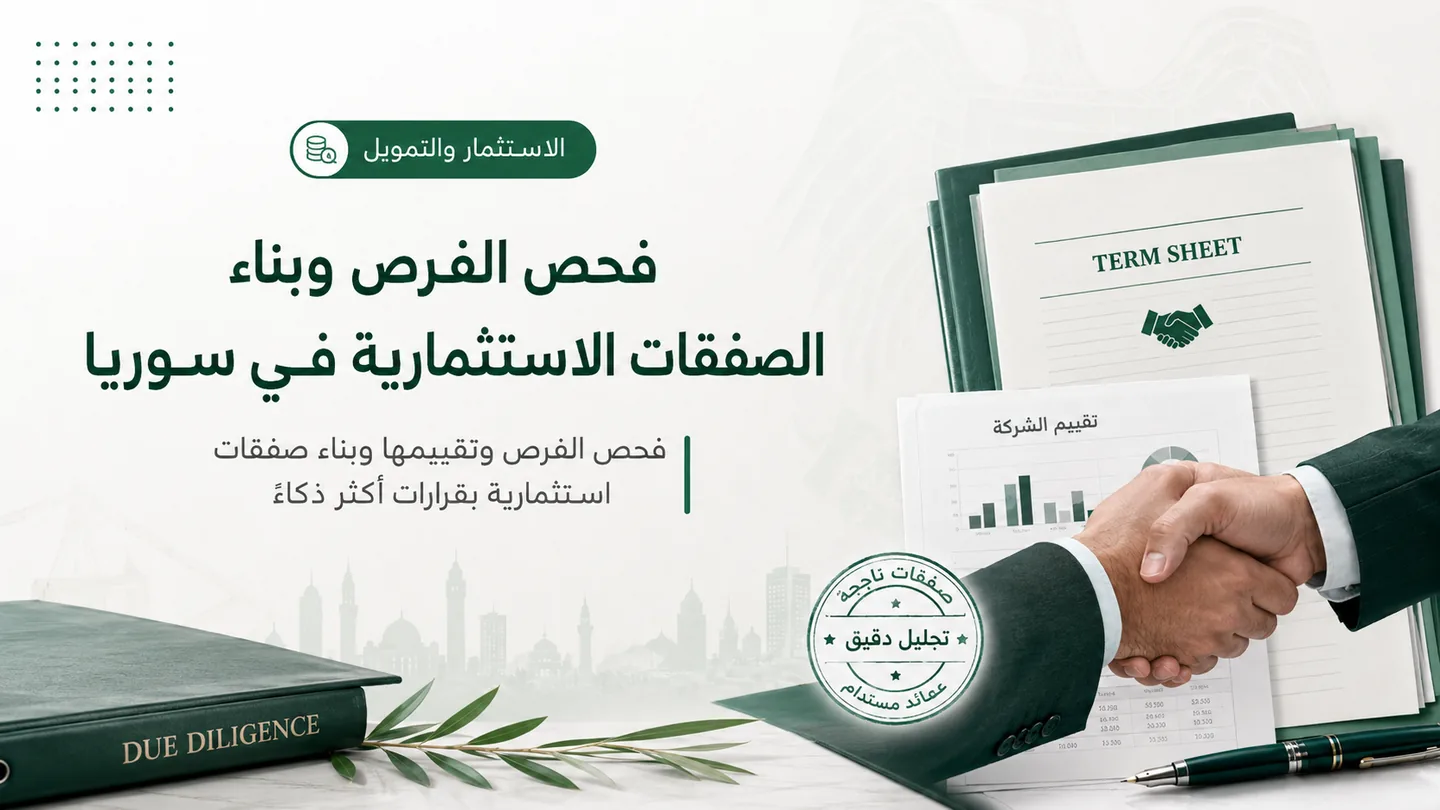
Governance does not require bureaucracy. It requires clear authority, reliable information, and controls against conflicts. A small or mid-sized company may need only a monthly board meeting, a short cash-sales-inventory report, an annual budget, dual approval for major payments, and documented related-party rules.
Use a concise dashboard: cash collected, replacement-cost margin, receivable days, inventory age, production downtime, on-time delivery, complaints, incidents, and available liquidity. Every metric should support a decision.
Assign responsibility for compliance, taxes, contracts, safety, and data even if the function is part-time. Any transaction with a shareholder or related business should be disclosed, benchmarked, and approved by a non-interested decision-maker.
Designing operational resilience
A business model that works only when power, transport, and imports are stable is not suitable for a volatile environment. Build practical alternatives:
- Two sources for critical materials or a calculated safety stock.
- Backup power with realistic fuel, maintenance, and replacement cost.
- Alternative shipment routes or warehouses where justified.
- Offline procedures for temporary technology or connectivity failures.
- Succession and cross-training for critical positions.
- Contract clauses for defined input-cost adjustments.
Resilience does not mean uncontrolled inventory. Classify materials by operational criticality, lead time, substitution, and shelf life.
Responsible investment is a risk-control system
In a country emerging from prolonged conflict, the origin of land and assets, labour rights, workplace safety, environmental impact, and non-discrimination matter greatly. Avoid projects dependent on disputed property, exploitative labour, unsafe processes, or illegal suppliers. These are not only ethical issues; they are legal, financing, reputation, and continuity risks.
Define measurable impact indicators such as formal jobs, training hours, local procurement, opportunities for women and youth, energy and water efficiency, and product quality. Do not promise what cannot be measured. A responsible company builds trust with employees, customers, and communities, reducing the probability of disruption.
A 100-day pre-investment plan
- Days 1–15: define sector, city, customer, competitive advantage, and ten preliminary targets.
- Days 16–30: interview customers, suppliers, experts, and select three opportunities.
- Days 31–45: request information, map ownership, and complete initial compliance screening.
- Days 46–60: visit sites, test operations, and build financial scenarios.
- Days 61–70: issue a non-binding offer with valuation logic and conditions.
- Days 71–85: complete legal, financial, tax, commercial, and operational diligence.
- Days 86–95: negotiate investment, governance, and the first-year plan.
- Days 96–100: final approval, funds-flow preparation, closing conditions, and post-closing actions.
The schedule is illustrative. Complex investments require longer. Do not let an exhibition, announcement, or competitive-pressure claim force the team to shorten essential diligence.
Red flags
- Refusal to disclose owners, bank information, or material contracts.
- Large sales without invoices, delivery evidence, or collections.
- “Everything is based on trust” when controls are requested.
- Property title or permitted use inconsistent with operations.
- Expired licences or regulated activity outside the licence.
- Supplier, employee, or tax obligations omitted from records.
- Dependence on one customer, supplier, employee, or political relationship.
- Personal accounts used for company revenue.
- Resistance to sanctions or beneficial-owner screening.
- Pressure for immediate payment because “another investor is waiting.”
- Valuation based on old asset cost rather than productive condition.
- Claims of government or bank guarantees that cannot be independently verified.
How an investor creates real value
Value does not come merely from buying an asset at a low price. It comes from adding something that the company cannot easily obtain alone: a quality system that opens an export market, equipment that reduces waste, working capital, professional sales management, a regional supplier agreement, product certification, or management processes that reduce founder dependence.
The best investments link return to operational improvement: more sellable output, lower energy use, reduced food loss, faster collections, or access to new customers. If the entire return depends on property or currency appreciation, the transaction is closer to speculation than productive investment.
Diaspora and regional companies can add networks, expertise, and markets. Diaspora capital does not automatically succeed, however. It requires capable local management, written contracts, periodic reporting, and a bankable funds flow.
25 questions before signing
- Who ultimately owns and controls the company?
- Where does 80% of revenue come from?
- How much reported revenue becomes collected cash?
- Does the selling price cover today’s replacement cost?
- What are the three largest unrecorded or contingent liabilities?
- Does the company own every asset it claims?
- Do licences cover the current activity?
- What happens after one week without reliable power?
- Is there an alternative supplier for each critical input?
- Can the company operate without the founder?
- Why do customers remain with the company?
- How can key contracts be terminated?
- Are there related-party transactions?
- How will funds enter and leave the company?
- Has the proposed bank reviewed the transaction type?
- Have all parties been screened?
- What taxes, fees, or penalties may arise?
- How will every unit of investment capital be used?
- What are the first-year performance indicators?
- Who approves hiring, borrowing, and major spending?
- What happens if a second funding round is required?
- Does the investor have access to records, accounts, and sites?
- Where and how will disputes be resolved?
- What is the exit path?
- Does the investment create value for customers, employees, and the market, or merely transfer ownership?
Related Bsouria guides
- Syrian economy, growth, inflation, and currency
- Investment opportunity and finance guide
- Company formation and founder agreements
- Project funding: equity, debt, and strategic partners
- Banking, transfers, and payments
- Import, export, customs, and documents
- Taxes and business fees
- Governorates investment map
- Syrian business directory
Official external resources
- World Bank Syria country page.
- World Bank damage and reconstruction assessment.
- UNDP Syrian Private Sector Dialogue 2026.
- World Bank exchange with the Syrian Investment Authority and French companies.
- U.S. Treasury 2025 Syria sanctions-relief statement.
- EU Council update on lifted economic sanctions and remaining targeted measures.
- UNCTAD Investment Laws Navigator. Databases may show older laws, so verify current Investment Law No. 114 and implementing instructions with the competent Syrian authority.
Conclusion: invest in a system, not a prediction
The opportunity in Syria is not the assumption that every asset will appreciate or every unmet need will become profit. Opportunity exists when the investor identifies a problem for which customers can pay, selects a capable company or partner, verifies reality behind the documents, structures rights and obligations, funds operations rather than appearance, and builds governance, compliance, and reporting.
Start small when information is limited. Test the market through a contract or staged project, and link further capital to measurable milestones. Do not commit all capital to fixed assets before verifying sales, collection, energy, inputs, and licences. Trust can support a relationship, but it cannot replace contracts or controls.
Syria needs productive companies, jobs, skills, services, infrastructure, and stronger value chains. That creates space for local, diaspora, regional, and international investors. The most durable investment combines return, resilience, responsible conduct, and local value creation. In that model, the investor is not only a source of money; it becomes a partner in building a stronger company and a more organised market.
This is general information and may change as new decisions are issued. Check official sources or a qualified professional before legal or financial decisions.


Comments (0)
Sign in to rate, like and comment.