Syria and Türkiye: From Buying a Machine to Building Lasting Production Skills
Textile looms and fabric rolls; conceptual scene — AI-generated illustration by Bsouria; not documentation of an existing project.
Source and editorial review: 23 October 2026. Business examples are hypothetical, not live offers; verify the current requirements for each activity before execution.
A conversation about investment with Türkiye may start with a machine on a telephone screen: a tempting price, apparently fast production and a seller saying the solution is ready. A workshop owner is not buying a picture, however. They are buying capacity expected to work in their premises, with their materials, staff and orders. Between the presentation and that capacity lie questions about testing, training, maintenance and customers. This is where useful businesses and services can develop for Syrians and their Turkish partners.
We examine cooperation through production: manufacturing a component, developing a product, selecting equipment, organizing spare parts or delivering a defined technical or professional service. The reader might live in Syria, Türkiye or a third country. Their legal situations are not assumed to be identical. This article announces no vacancies or available contracts. It explores how a broad idea becomes a testable relationship with an identifiable benefit for each participant.
| Model | What is tested? | First evidence |
|---|---|---|
| Contract production | Repeatable conformity | Specification, sample, inspection |
| Equipment with support | Usable operating capacity | Trial, training, service terms |
| Parts and service | Continuity within competence | Reference, compatibility, role |
1. Start with the problem, not the machine’s name
Are orders late because capacity is too small, or because materials arrive unpredictably? Does a defect come from equipment, measurement or inconsistent inputs? A new machine looks like a quick answer but cannot resolve every cause. Describe the issue in working terms: preparation time, dimensional variation, an unavailable service or repeated rework. You can then compare solutions instead of equipment photographs. An apparently technical bottleneck may be partly an organizational problem.
Who will buy the additional output?
Without a customer for the result, large capacity should not become an objective in itself. Faster equipment does not make demand grow automatically. Value may instead lie in smaller batches, flexible dimensions or consistent quality. Ask which result the enterprise can repeatedly sell at a manageable cost and pace. Customer questions come before asset expansion. A reliable small operation may be more useful than a large installation that spends much of its time waiting for orders.
2. Why examine Türkiye for industrial cooperation?
Türkiye’s investment agency describes machinery and production inputs, while the official commercial guide presents a diversified manufacturing base. This explains researching suppliers and technical partners, not assuming every offer is suitable or every Syrian buyer enjoys another buyer’s conditions. Requirements depend on goods, parties and destination. [Invest in Türkiye — Machinery sector] [International Trade Administration — Türkiye advanced manufacturing] [Türkiye Ministry of Trade — Dated Syria cooperation meeting, July 2026]
Four relationships can be investigated: contract production, equipment with support, defined spare-parts supply and services that help apply or monitor production. These are editorial suggestions, not existing orders. A project may combine them, but should not conceal every obligation inside one unexplained invoice. Buyers should know what they pay for and suppliers what they undertake to provide. Comparing quotations becomes easier when equipment and additional services are distinguishable.
Not every enterprise needs a joint company. A trial batch, service agreement or recurring supplier relationship may suffice. A company adds ownership, management, registration and obligations without creating demand by itself. Ask what cannot be achieved through a limited clear transaction before selecting a larger structure. A partner speaking the language does not replace technical inspection, legal advice or checking authority to sign.
3. Contract manufacturing: a sample begins the discussion
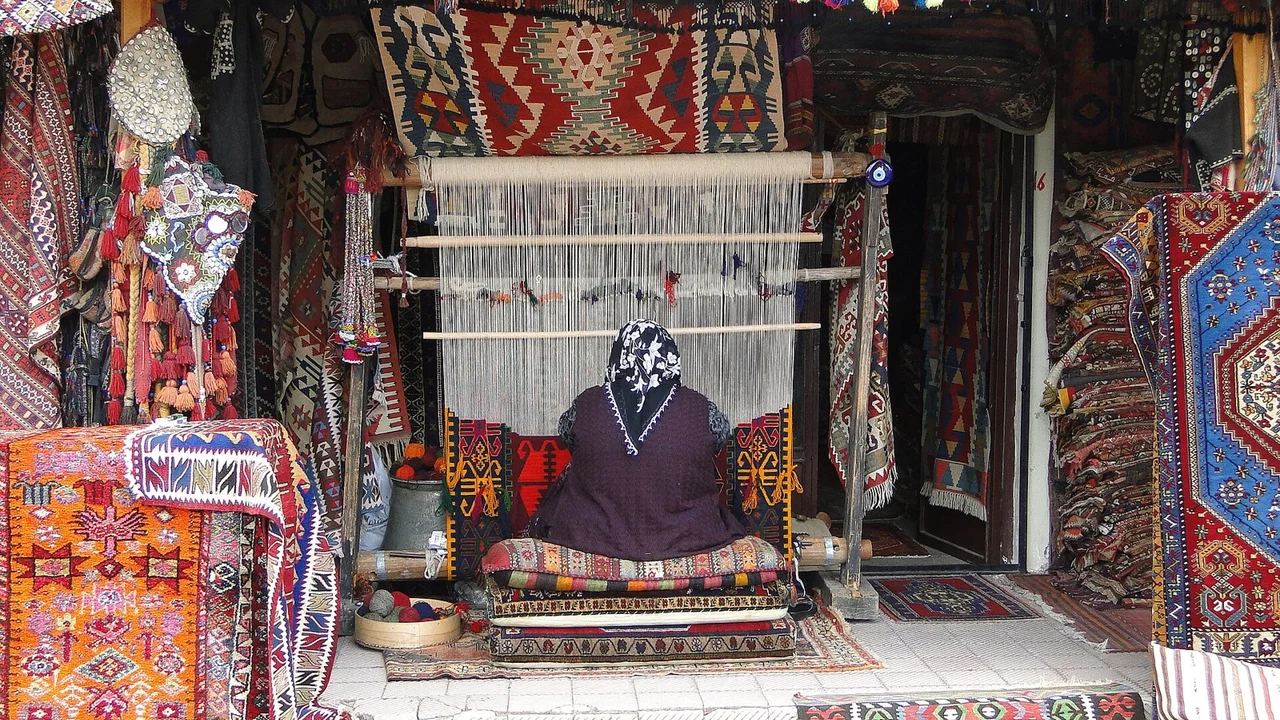

A Syrian team may understand a design or customer while a supplier produces a component or batch. “Make it like this picture” is insufficient. Define use, material, dimensions, acceptable variation and inspection. Product-specific regulatory requirements cannot be decided by appearance. Establish them before commissioning production or offering the item to a buyer. A shared understanding of use helps distinguish essential characteristics from cosmetic preferences.
Who owns the design and tooling?
If someone pays for development or a mould, clarify ownership, retained use and whether tooling can be moved. Who maintains it and bears damage? These are agreement questions needing suitable review, not details to postpone because the first batch is small. Nor should anyone share a customer’s file or another party’s design without the necessary right. Technical cooperation should not quietly transfer knowledge beyond what its owner agreed.
Give the accepted sample an identifiable reference, record modifications and approval, and reassess changes to material or method. Consistency matters more than an excellent demonstration piece followed by a different batch. A reasonable inspection agreement can address shortages and nonconformity before arrival. It should be proportionate to the transaction and understood by both parties rather than introduced only when a disagreement occurs.
4. Equipment: compare operating cost, not purchase price alone
Ask which material, dimensions, production period, electricity, space and operator skills underpin the quotation. A trial using different inputs does not establish performance in your workshop. Appropriate independent or specialist assessment may be needed. This article provides no instructions for modifying machinery; qualified assessment and safety come first. A seller’s demonstration is information to examine, not a substitute for understanding the conditions in which the result was achieved.
New and used equipment raise different questions
For used machinery, seek condition, changes, available service history and consumable requirements, then verify proportionately to value and risk. “Nearly new” is not an inspection report. For new machinery, read warranty coverage, exclusions and who provides service where. The word warranty does not itself explain transport, technician costs, response time or parts availability. These elements may materially change the usefulness of a purchase.
Count installation, preparation, training, trial materials, maintenance and possible downtime. Smaller equipment with support may suit the enterprise better than a larger machine it cannot operate properly. Repairing or reorganizing may justify postponing a purchase. A temporary discount should not rush an asset lacking premises, operator or customer. The right offer addresses the enterprise’s problem, rather than the seller’s wish to close a sale.
5. Spare parts and maintenance: work between the invoice and continued production
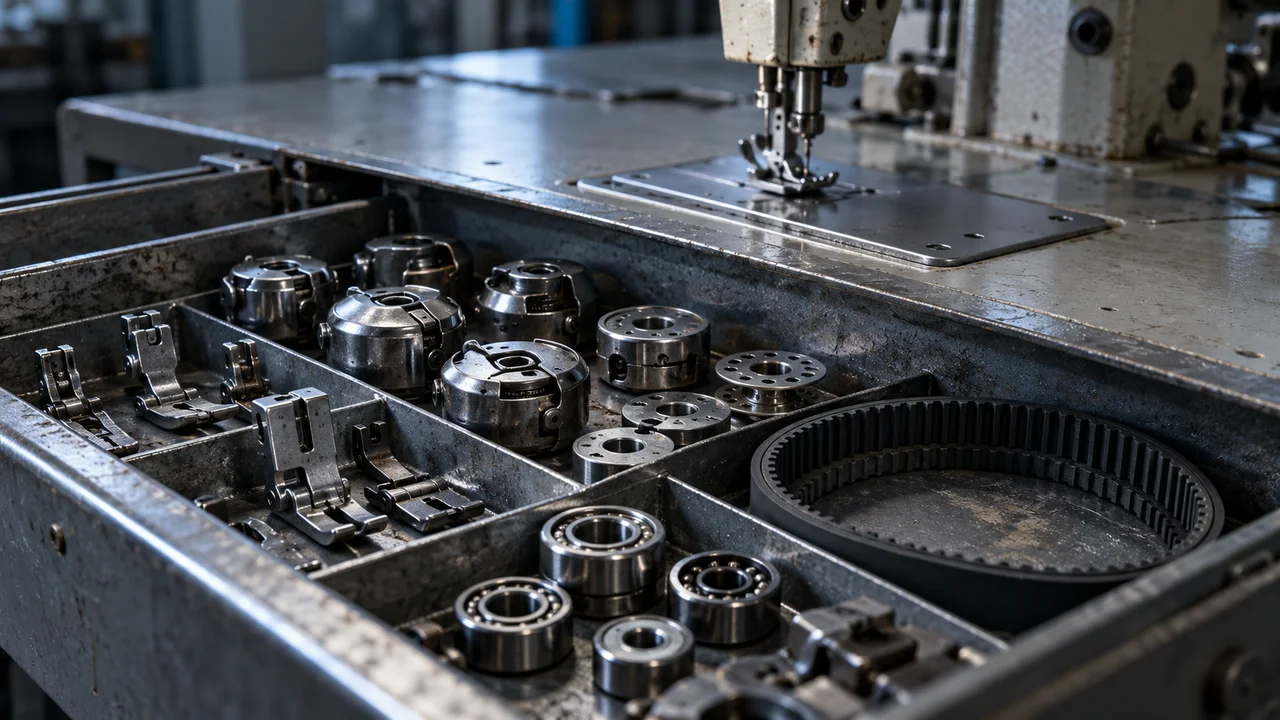
A stopped machine needs correct identification and compatibility, not a similar-looking component. Parts catalogues, order follow-up, suitable training and authorized specialist maintenance are potential services to investigate. This is not an invitation to hazardous work or unapproved substitutes. Professional judgment includes recognizing limits and referring work requiring another specialist. The customer should understand whether you supply an item, provide advice or undertake an actual intervention.
Keep model, reference, specification and suitable authorized images rather than relying only on a colloquial name. Clarify source and whether something is original or an alternative meeting defined requirements, without claiming another party’s brand. Check applicable product controls. Accuracy protects time and reduces the risk of goods arriving with no agreed use. A description should be sufficiently precise for another colleague to identify what was ordered.
Documenting faults, service schedules and frequently used parts can create a professional service where genuine demand exists. Do not promise immediate access to every component or the elimination of downtime. State what can be supported: an identified reference, a conditional estimated date and the limits of your role. Dependable information can matter more to a manufacturer than a large promise nobody can trace.
6. A quality file both sides understand
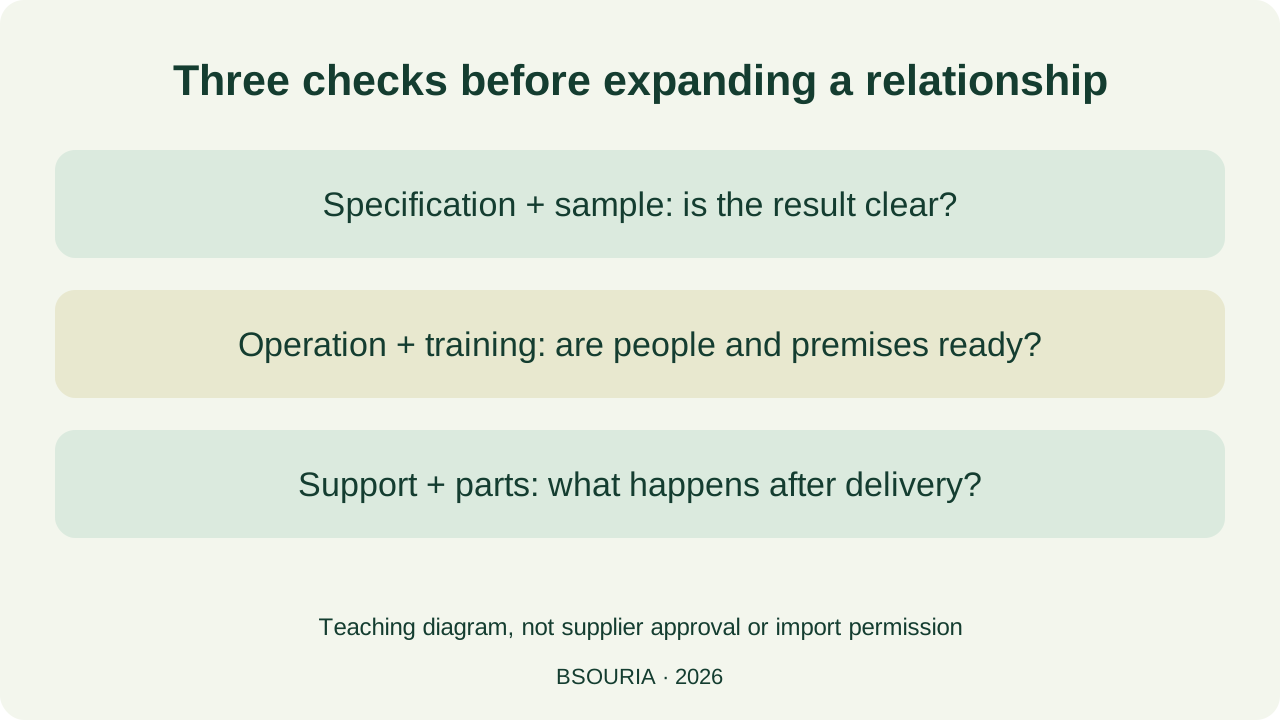
The same term may mean different things to buyer and supplier. Prepare a short file covering use, specification, sample, measurements and acceptance. Where translation is needed, use appropriate technical review rather than unexamined word substitution. Translation should not add certification or obligations absent from the original. The coordinator supports understanding but does not replace the person responsible for technical decisions. Questions should be recorded and answered, rather than smoothed over to make a proposal sound simpler.
Changes need a new version
A revised dimension or material should have a date or identifier, approval and an explanation of price or timing effects. A simple organized file can work. One team should not produce to an old version while another inspects against the latest one. Organizing this information can itself be a service if a customer needs it and can assess its result. The value lies in preventing a concrete error, not adding paperwork for its own sake.
Do not move drawings, process knowledge or customer information between parties merely because you know both. Agree what can be shared, purpose and rights. If training is included, specify who teaches which skill and what the learner should be able to do. Attendance does not prove mastery of every machine. A photograph beside a line does not establish operating experience. Honest descriptions are the basis of a useful professional portfolio.
7. Roles for residents and diaspora members
An experienced person may help qualify suppliers, organize customer requirements, follow a sample or deliver defined training where lawfully permitted. A manufacturer may need coordination between language groups or product documentation. These are areas for research, not announced vacancies. Syrian nationality or residence in Türkiye does not establish competence for them. A candidate should explain which result they can provide and what experience supports that claim. [Türkiye Ministry of Labour — Foreigners opening and working in a business] [Türkiye Ministry of Labour — Work permit application routes]
Türkiye’s labour ministry distinguishes establishment procedures from authorization to work and describes routes for different statuses. Company ownership is not assumed to confer work rights. Temporary protection and other residence situations are not identical. Consult current official information and suitable specialists, rather than an intermediary promising automatic permission through a share purchase.
A diaspora member elsewhere may understand a sales channel or customer need and contribute knowledge or funding under a clear arrangement. Check requirements in the country of residence too, and distinguish service fees from investment. Multiple passports or accounts do not remove counterparty, tax and contract checks. Describe your authority, decisions and matters requiring another person’s approval. A helpful introduction should not silently become responsibility for delivery or collecting money.
8. Delivery, origin and payment belong before the last day
Confirm the route, movement type, product, vehicle and people at execution. A familiar crossing or commercial meeting announcement is not permission for all goods. Buying a component or storing a product in Türkiye does not automatically confer Turkish origin or trade-agreement benefits. Obtain appropriate product-specific advice before pricing an assumed exemption. Transit, processing and local production should not be treated as interchangeable terms. [International Trade Administration — Türkiye import requirements] [US Treasury / OFAC — Current Syria-related measures] [Council of the EU — Syria measures and relations]
Arrange executable payment through a licensed institution with truthful documents. Do not conceal services inside an inaccurate goods description or misrepresent parties. Check applicable goods and counterparty controls; general relief does not oblige every bank to accept every operation. Ask for explanation when unclear rather than seeking an opaque workaround. Timing and required documents should be understood before a deposit is promised.
Physical receipt and performance acceptance may occur at different places and are not necessarily the same event. Agree the significance of documents, acceptance scope and later issues within a defined arrangement. Do not sign a description you have not checked or ask an unqualified person to certify technical performance. Clear acceptance protects supplier and buyer and makes after-delivery follow-up less tense.
9. One product before a larger relationship
Imagine a workshop producing fabric bags for a professional buyer. It wants more consistent dimensions and a better finish. This is hypothetical, not an existing order. The team describes the problem, gathers current samples and requests a testable proposal. It does not ask a supplier to solve every business problem, or judge success solely by machine speed in a video.
Testing could show that training and measurement practices suffice, that a suitable tool is needed or that current equipment genuinely does not fit the product. Each conclusion has different costs. Evidence should precede buying. Ask whether the customer values the improvement enough to support its cost. A technically improved result with no viable use may not justify investment now. Retain findings, remaining defects and promises, then reassess requirements for any batch, training or purchase.
10. Build a service around production
Specification files, authorized parts references, sample schedules and technically reviewed instructions are inspectable services rather than vague “connections.” A provider should check permission to practice and describe responsibilities. Knowing two languages does not make someone a technical translator for every industry. Refer questions dependent on material, measurement or safety to a suitable specialist rather than guessing.
Coordination should preserve what each party says, not improve a seller’s promise or hide a customer’s difficult question. A limited paid assignment can establish outputs, rights and a review point. It does not silently authorize signing or collecting funds. Disclose compensation from multiple parties and address conflicts. Customers benefit from knowing who represents them, who sells and who offers an independent view.
11. Funding: distinguish ownership from use
A diaspora participant might fund equipment for a relative’s or partner’s workshop. Agree who owns, uses and disposes of it and what happens on closure or departure. Family assistance should not turn into undeclared share ownership, nor every expense into capital. Obtain appropriate advice on ownership, registration and tax for the parties and jurisdictions.
Count preparation, training and non-producing time. Staged funding needs a result, budget and continuation decision for each stage. A working machine does not justify promising a fixed return. Customers, quality, collection and operating costs remain separate factors. Equipment can be functional while the enterprise struggles commercially. A clear agreement should make those distinctions visible rather than hide them behind enthusiasm for machinery.
12. Research should end in a decision, not necessarily a purchase
Describe the need and user, collect available evidence and identify a limited set of relevant suppliers. Check identity and pertinent experience. Send comparable requirements rather than different specifications followed by a misleading price comparison. Record unanswered questions instead of optimistic numbers. Then examine samples, suitable inspection, support and full costs.
Procedures and approvals may exceed initial research time. The result can be a narrower trial, postponement, supplier selection or no purchase. A good decision is not always yes. Pause if seller or beneficiary identity is unclear, specifications are withheld, false documents are requested or permission is missing. Greater volume does not fix those gaps. A deal that cannot tolerate a basic question is a poor foundation for years of production.
13. Turn training and warranty into usable services
Ask who is trained, in which language, where and for what: basic operation, quality checks or defined maintenance. Establish suitable documentation and assessment. Attendance alone does not prove competence. A learner should understand both permitted tasks and when to seek help. The workshop also needs a real support route after the visit: contact, information required, charges outside coverage and limits of remote assistance.
The phrase permanent support does not explain response times, costs or exceptions. Keep manufacturer instructions and seek qualified advice rather than random repair tips. This article does not replace operating manuals or authorized training. Include service capacity in investment planning from the beginning. If knowledge rests with one person, agree how appropriate staff may learn it while respecting that expert’s rights and time. Documentation can be a paid agreed service, not extraction of someone’s expertise.
Ask questions that produce comparable answers
For training, ask the provider to describe the starting knowledge expected from participants. A session suitable for experienced operators may not suit beginners. Ask how comprehension will be assessed and which material the workshop is permitted to retain. If interpretation is required, establish who provides it and whether the technical vocabulary is understood. These are practical planning questions, not a claim that one training format fits every machine or enterprise.
For a warranty claim, distinguish reporting a symptom from diagnosing its cause. The workshop should provide the information requested through the agreed channel and obtain qualified assistance where necessary. It should not attempt an unsafe intervention merely to demonstrate that it tried everything. The agreement can identify responsibility for inspection and the treatment of costs if the problem falls outside coverage. Avoid assuming the answer before the equipment and circumstances have been examined.
At the end of an assignment, record the result delivered, any outstanding matter and the next agreed action. A brief handover is enough if it enables both teams to understand the same position. It can distinguish completed work from an additional request never commissioned. Learning from a trial should also change the next quotation: a task that took longer or required new inputs should not be silently repeated under an unrealistic old assumption. Clear revision protects the relationship better than accumulating resentment over unspoken expectations.
14. A portfolio that opens a better conversation
Show demonstrable work, identify your role, distinguish training samples and obtain consent for people, drawings and information. Do not present another factory as your own or another company’s certificate as your approval. A small truthful portfolio helps more than claiming every industrial solution. Bsouria can support discovery and description but cannot certify suppliers or issue work permits. Appropriate verification and agreements turn an introduction into responsible cooperation. The lasting benefit is sometimes a team knowing why a process works, when it fails and where to obtain qualified help before expanding.
Frequently asked questions
Does cooperation require buying a large machine?
No. A component, trial batch, training, documentation or defined spare-parts service may be relevant. Start with the problem, customer and execution capacity before choosing assets or a partnership structure.
Does establishing a company automatically authorize a Syrian to work?
Do not assume so. Ownership, operation, residence and work authorization differ by status and activity. Consult current labour-ministry information and relevant specialists before acting on an intermediary’s promise.
How should two similar supplier offers be compared?
Examine specification, sample, inspection, timing, support, rights and total cost. A picture or price does not prove equivalence. Check identity and authority and use a suitable trial before broad commitments or exclusivity.
Does transit or partial processing confer Turkish origin?
Not automatically. Origin and benefits depend on product rules, operations and current arrangements. Do not build pricing on an assumed exemption; obtain qualified examination of the specific transaction.
Are these existing jobs or purchase orders?
No. They are educational examples and research directions, without guaranteed demand or profit. Each activity needs a real customer, skills, current requirements and lawful execution and payment.
How can Bsouria help?
Use published articles, profiles and opportunities to understand questions and explain your activity. A listing does not guarantee a transaction or confer approval. Independently verify parties, rights, documents and execution.
Sources and further reading
- Invest in Türkiye — Machinery sector
- International Trade Administration — Türkiye advanced manufacturing
- Türkiye Ministry of Labour — Foreigners opening and working in a business
- Türkiye Ministry of Labour — Work permit application routes
- International Trade Administration — Türkiye import requirements
- US Treasury / OFAC — Current Syria-related measures
- Council of the EU — Syria measures and relations
- Türkiye Ministry of Trade — Dated Syria cooperation meeting, July 2026
Explore more on Bsouria
Business opportunities · Business directory · Syria and Lebanon: residents and diaspora
Image sources and reuse
Photographs are dated in their captions, and conceptual scenes are identified. Archival images do not document current conditions or fund projects. Educational diagrams are by Bsouria.
- Textile looms and fabric rolls; conceptual scene — AI-generated illustration by Bsouria; not documentation of an existing project.
- Carpet weaving in Göreme, Türkiye, 2011 — Adam Jones from Kelowna, BC, Canada / Wikimedia Commons · CC BY-SA 2.0. Cropped and resized; the photograph does not establish current conditions.
- Industrial sewing-machine spare parts; conceptual scene — AI-generated illustration by Bsouria; not documentation of an existing project.
Refreshed slideshow license: CC BY-SA 4.0. Sources, authors and image licenses are listed above; cropped images and their segments retain the original or compatible license.