Syria’s Living Cultural Economy: Crafts, Music, Books and Creative Work
Traditional glassblowing in Damascus, 2023 — Tmnadili / Wikimedia Commons · CC BY-SA 4.0. Cropped and resized; the photograph does not establish current conditions.

Editorial review: 23 October 2026. Examples and suggestions are illustrative, not announcements of programmes or guaranteed outcomes.
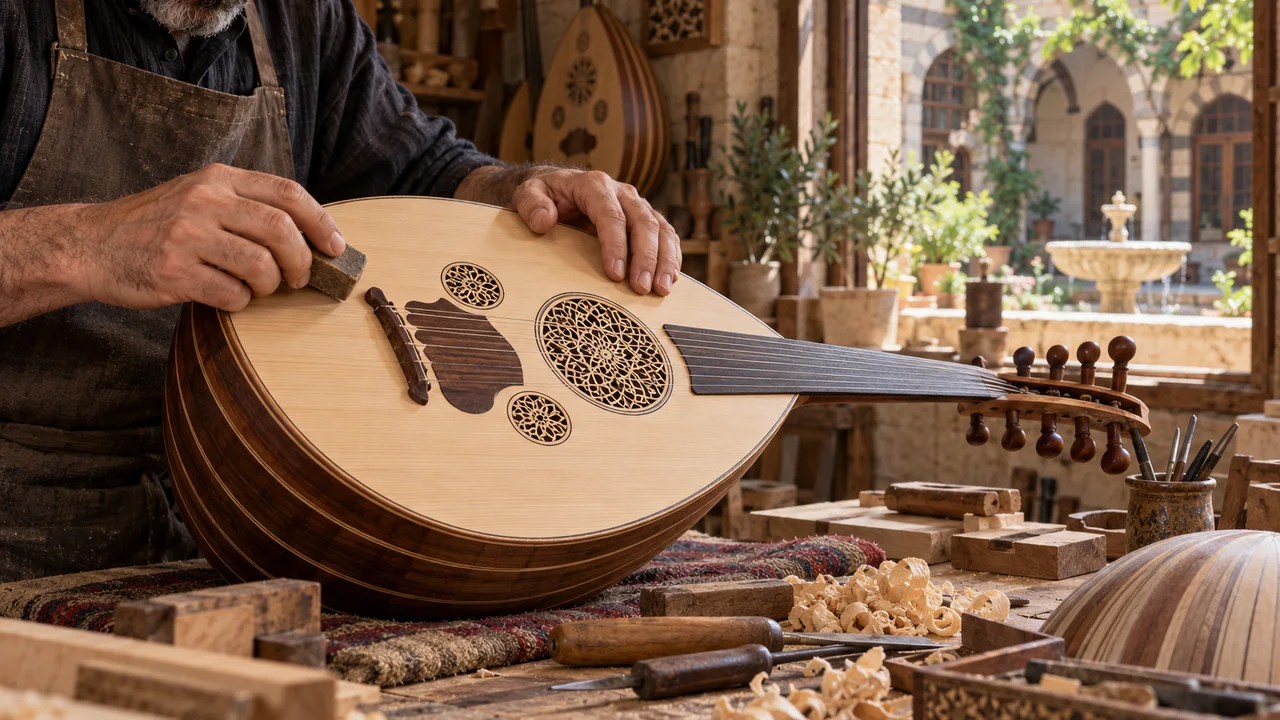
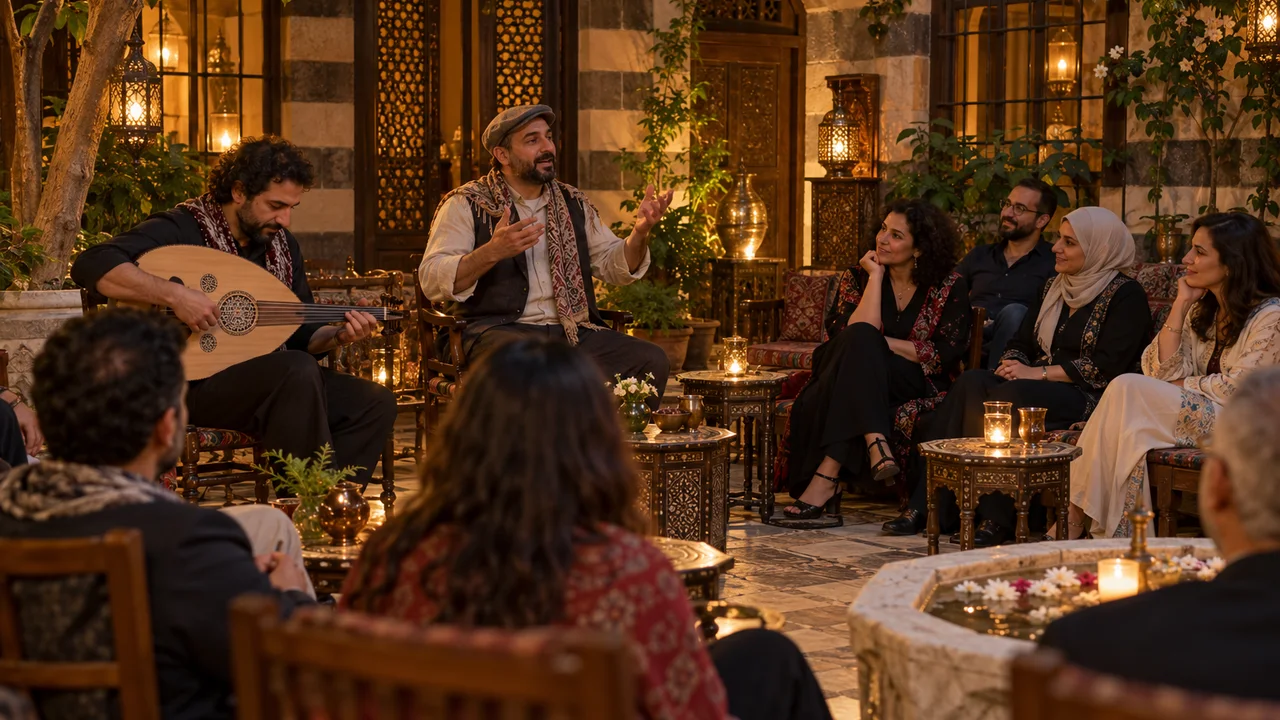
A craftsperson explains why one piece of wood suits the job better than another. Elsewhere, a designer reviews a book cover, while a small audience gathers for a story and an oud performance. These are illustrative scenes, not projects we claim to have visited. They show that culture lives beyond museum displays: in the time spent learning a skill, the payment for a professional contribution and the relationships formed through making and sharing something.
Discussions of Syria’s economic and social conditions can leave culture until last, as though it must wait for every other problem to be solved. Yet publishing, design, crafts, music and documentation also involve work, learning and exchange. This does not mean a cultural event solves an income crisis, or every talent becomes a business. It means taking seriously the practical conditions that let cultural activity continue without reducing its value to sales alone.
A living culture, not one picture of a country
Syria is larger than a single old city, dish or song. Local, linguistic, urban, rural and family experiences differ. Contemporary work does not need an antique appearance to belong to Syrian cultural life. Listen to how practitioners describe themselves rather than introducing someone as the last guardian of a tradition or the representative of an entire community. People are more than a convenient exhibition label.
UNESCO’s Syria page includes both physical heritage and intangible cultural practices and expressions. Its 2005 Convention on the diversity of cultural expressions also provides a framework involving education, cooperation and development. These references support a broad understanding of culture. They do not establish that a particular Syrian venture is accredited, funded or officially endorsed. The practical examples below are editorial suggestions unless explicitly identified otherwise. UNESCO
What is a cultural economy?
It includes work producing, teaching or communicating cultural expression: making an instrument, editing a book, designing a product, recording sound, translating material or organising a gathering. It overlaps with trade, education and technology. You do not need the title of artist to contribute. Editors, sound technicians, photographers, production coordinators and accountants all help work reach an audience and remain viable.
Crafts: understand the skill before the sales story
A customer sees a finished object; its maker sees selection, practice, correction and labour. Explain materials, care, intended use and lead time so the price becomes understandable. Distinguish handwork from industrial production without misleading claims. Do not call every repeatable design unique, or borrow the name of a place or community without a meaningful connection. A good story should explain the product rather than manufacture its authenticity.
A maker and designer might develop a useful new size, protective packaging or information in two languages. This is a proposed collaboration, not an existing order. Begin by asking what can change without compromising quality. Agree payment, contributions and design rights before a trial. Contemporary use can support a tradition without requiring the maker to abandon the experience that gives the work its character.
Teaching deserves time and payment
An apprentice needs observation, correction, suitable tools and safe boundaries, not merely a video of expert hands. When inviting a practitioner to teach, define scope and compensation. Repeated requests to share knowledge for exposure can exhaust the person a programme claims to support. Respecting a craft includes respecting the daily work that enables its practitioner to keep working and teaching.
Music and storytelling: behind an enjoyable evening
A small gathering involves venue choice, agreements, sound, scheduling and audience arrangements. If tickets are sold, explain price, inclusions and cancellation conditions. If entry is free, organisers still need to understand who covers costs. Free attendance does not remove wages, preparation, utilities or equipment. A clear arrangement protects both participants and those doing the work behind the photographs.
An intimate recurring event may be more manageable than a festival that happens once. Ask about sound, timing and access, not only enjoyment. Oral storytelling can connect generations, but hearing a personal memory does not give an organiser unlimited publication rights. Discuss recording and reuse beforehand. Someone should be able to take part without automatically becoming promotional material for the next event.
Books and publishing: more than printing
A book involves writing, editing, proofreading, design, production, distribution and an intended readership. Focusing only on paper prices hides the rest of this chain. A small team might test interest through a permitted sample or author discussion before a large print run. Online likes are not confirmed purchases, and a slow first week does not establish that a book lacks cultural value.
Digital publication creates options but does not remove authors’, translators’, illustrators’ or photographers’ rights. Online availability is not permission to reprint. Agreements should cover edition, language, duration, payment and permitted uses. Accessible digital layouts or licensed audio editions can widen participation when properly produced. They should be planned with attention to rights and quality, rather than added hastily to a sales announcement.
Design and content: contemporary work with roots
Not every Syrian design must include an arch or ornamental pattern. It might address present-day life through illustration, video editing, a book podcast or an accessible explanation of a craft. Roots can appear in the questions asked and stories selected, rather than a repeated symbol. Allowing variety gives creators room to work beyond narrow audience expectations about what their output should look like.
Define deliverables, deadlines, revisions, file ownership and contributor credit before a content assignment. If AI tools are used, review their output. Do not attribute invented statements or participation to a real person. A conceptual illustration can be useful when labelled clearly; presenting it as evidence of a real event creates a misleading impression. The same distinction applies to this article’s generated images and illustrated video.
Where does this meet the Syrian economy?

Cultural work operates amid venue, transport, energy and equipment costs and an audience’s ability to pay. Global platform-user numbers do not establish local market size, and national economic figures cannot predict an individual artist’s income. Start with a specific offer: what is delivered, who requests it, how often and at what cost? Depending on the activity, income might combine products, teaching, professional services or support with transparent conditions.
Separate income from social outcomes. A free workshop may produce useful learning but still need a funder. A shop with healthy sales may not be a training programme at all. Every project need not perform every role. Choose suitable measures: quality, fair compensation, returning audiences or access for people previously excluded. Clarity about purpose produces a more honest assessment than claiming broad transformation from every activity.
Design with the audience
Ask about time, travel, cost, language and format. Someone may miss an event because the subject is unappealing, or because transport is unaffordable. These are different problems. Attractive venue photographs do not answer questions about stairs, sound or comfortable seating. Small improvements can follow from accurate information about needs, without collecting unnecessary personal details from prospective participants.
Reduced-price or supported access should not publicly embarrass recipients. Likewise, do not ask a contributor to justify their presence or represent a whole identity group. A stronger discussion lets people talk about their work and questions. Inclusion is also an operating choice: clear information, manageable registration and a way to ask for assistance can matter more than promotional claims about being open to everyone.
Beyond a single cultural centre
Potential collaborations can be explored across Damascus and its surroundings, Aleppo, central Syria, the coast, the south, the north and the east. These are geographic research directions, not a verified directory of currently open venues. A suitable existing library, workshop or hall may be more useful than a new building. Check current conditions, access, applicable rules and local interest before advertising an activity.
Collaboration need not always transport a large team. A locally facilitated discussion, permitted small travelling display or low-bandwidth online exchange may work. Prepare for differing resources and connectivity. Do not make digital participation the only route or assume that a format successful in one place will suit another unchanged. Ask, test and adapt rather than imposing a finished programme from elsewhere.
Working with Syrians abroad
An overseas contributor might provide translation, editing, teaching, distribution contacts or finance. A locally based team brings operating knowledge and delivery. Write down decision rights, deliverables and arrangements for delay. Good intentions do not replace an agreement that respects time differences, capacity and the actual amount of work. Avoid promising an elaborate programme before confirming who can carry it out.
Do not make identifiable photographs a condition of proving that support was used well. Costs, outputs and aggregate participation can often be documented without exposing faces or private stories. Seek suitable permission for any published account. Financial transparency and respect for participants are compatible. People should be able to learn and work without being required to become an advertisement.
Pricing that respects invisible work
For an object, count materials, labour, waste, packaging and delivery. For teaching or events, include preparation, facilitation, coordination and follow-up. Time the customer does not see is not free. If a price is subsidised, identify that support so an unsustainable promotional price does not become the expected norm. Clear pricing can remain simple without concealing what delivery actually requires.
There is no universal Syrian price for these services. Obtain dated, comparable offers and define what each includes. Agree staged payments and revisions, and seek suitable accounting or legal guidance when needed. Personal trust is valuable, but should not substitute for clear rights, especially among people who know one another socially and may find it awkward to discuss money or ownership.
Memory and documentation require consent
A recording or family photograph can have cultural value while containing information its owners do not want made public. Establish the purpose: private preservation, research or publication. Check who can authorise use. Do not promise complete removal of every internet copy after publication. Limited access, reduced identifying details or an agreed pseudonym may be suitable where appropriate and permitted.
Separate verified information from recollection and interpretation. Label approximate dates as approximate and allow correction. Different accounts may reveal different experiences rather than a mistake to erase. Responsible documentation does not make a story more dramatic at its contributor’s expense. An appealing headline cannot turn uncertainty into evidence, even if the claim is repeated many times.
A small trial worth repeating
Consider an imagined collaboration between a maker, designer and facilitator presenting instrument-making. They explain what visitors will observe or safely try, rather than promising mastery in two hours. They agree capacity, payment and venue, then test the explanation with a limited group. This examines a defined service before announcing a comprehensive cultural centre with no established audience.
Afterwards, ask whether workers were paid, participants understood the learning limits, access worked and anyone wanted to return. Attendance and photographs alone are insufficient. A weaker result may call for a simpler explanation, another audience or stopping. A small event that teaches the organisers something can be more useful than a large one that leaves only fatigue and unresolved expenses.
The next stage: possibilities, not guarantees
Improved mobility and services could widen distribution and gatherings. Continued pressure on household budgets could require different formats and transparent access support. More digital work could increase the importance of translation, rights and verification. These are planning scenarios, not guaranteed forecasts for Syria’s cultural sector. Projects should monitor their own audience, costs and delivery rather than relying on optimistic national narratives.
The key questions remain close to people: can the creator continue without exhaustion, can audiences participate meaningfully, and does a skill or relationship survive beyond the event? This recognises culture within economic and social life without asking it to solve every national problem. Ticket sales matter to some activities, but they are not the only measure of cultural value.
Make culture approachable without flattening it
A familiar word, melody or household object can give someone a way into a work. Recognition is not the entire purpose: culture can also introduce an unfamiliar question. People need not agree or enjoy the same forms. They need an invitation to watch, ask and disagree without feeling that a venue is examining their sophistication. Accessibility does not require removing everything difficult; it requires a useful point of entry.
Describe the actual experience rather than calling it exceptional. Will visitors listen or take part? Is prior knowledge needed? How long does it last? Such details respect their time. Plain language is not lower-quality thought. Explaining a difficult idea clearly can require more work than repeating terminology understood only within a profession.
Between generations and languages
A conversation between an experienced maker and a designer or technician can reveal questions neither considered alone. Do not reduce the older contributor to memories or the younger one to filming. Ask what each wants to learn or make. A good outcome may be an object, a permitted recording or a clearer account of a process; not every useful result must be sold.
Translation should preserve meaning, names and context rather than mechanically substitute words. A local term may need a short explanation or its original name. Syria’s varied language experiences and those of Syrians abroad create exchange possibilities, not permission to speak for communities without involving them. A good translation helps readers understand while respecting the limits of what a contributor actually said.
Build an audience relationship, not a day of noise
Views alone do not establish a relationship. A smaller group may return to read, buy or learn while a larger group forgets a striking photograph. Can people find the next event, understand the regular offer and raise a question? Continuity needs a recognisable rhythm. Where people have chosen to follow updates, a clear short message can be more useful than overwhelming promotion.
Returning should remain a choice, not an obligation. Respect withdrawal and privacy. Listening to feedback does not require accepting every request; it means making informed decisions and explaining them where appropriate. A project can develop a distinct identity while remaining open to change. Differences in taste should not become personal disputes or demands that a small team serve everyone in every way.
Leave room for experiments
Before copying a successful format, ask what you add: clearer explanation, a useful adaptation, another language or an underserved audience. Innovation need not mean inventing an unprecedented activity every week. Delivering familiar work well, crediting contributors and respecting earlier work can itself be valuable. A recognisable cultural offer does not need to become an imitation of every popular trend.
Set an affordable time and cost for testing and accept that some ideas will end. Do not inflate a success or interpret one setback as a verdict on culture’s value. Cultural work belongs within economic reality without becoming only a sales test. Quality, fair working conditions and audience relationships together provide a more useful picture of what deserves continuation.
Frequently asked questions
Does a cultural economy turn heritage into merchandise?
Not necessarily. Earning income can coexist with respect for practitioners, meaning and access. Problems arise when identities or stories are used without permission or workers are denied fair payment in heritage’s name. Clear rights and defined services help balance financial continuity with cultural and social value.
Must the project be in a large city?
No. It needs suitable audiences, premises and delivery capacity. An existing workshop or library may be appropriate, subject to current conditions and local requirements. Test access, timing and resources rather than relying on a city’s reputation. Formats can differ between places while preserving the central idea.
How can someone begin with limited capital?
Choose a small service you can deliver: editing, a reading discussion, a skill demonstration or a trial product. Count time and costs and agree rights and expectations. Avoid buying substantial equipment before testing demand. A limited start does not guarantee success, but makes learning more manageable.
May I reuse music and images found online?
Not automatically. Check the rights holder and licence, including commercial use, adaptation and translation. A source credit alone does not always grant permission. Keep evidence of suitable authorisation. Images involving people or private information can raise additional consent questions beyond copyright.
How does this fit Bsouria?
It broadens business discussion to cultural professions and services, connecting skills, products, audiences and potential partners. The platform’s directory and cooperation opportunities can help start conversations. An entry is not accreditation or a guarantee. Verify the other party’s identity, capability and rights before agreement.
What is a useful first action?
Select one field and one manageable idea. Ask potential participants about their needs, agree payment, rights and a suitable setting, then test it. You do not need to represent all Syrian culture in a first attempt. Deliver clearly, listen carefully and decide what deserves repetition.
Sources and further reading
Explore more on Bsouria
Business opportunities · Business directory · Companion article
Image sources and reuse
Photographs are dated in their captions, and conceptual scenes are identified. Archival images do not document current conditions or fund projects. Educational diagrams are by Bsouria.
- Traditional glassblowing in Damascus, 2023 — Tmnadili / Wikimedia Commons · CC BY-SA 4.0. Cropped and resized; the photograph does not establish current conditions.
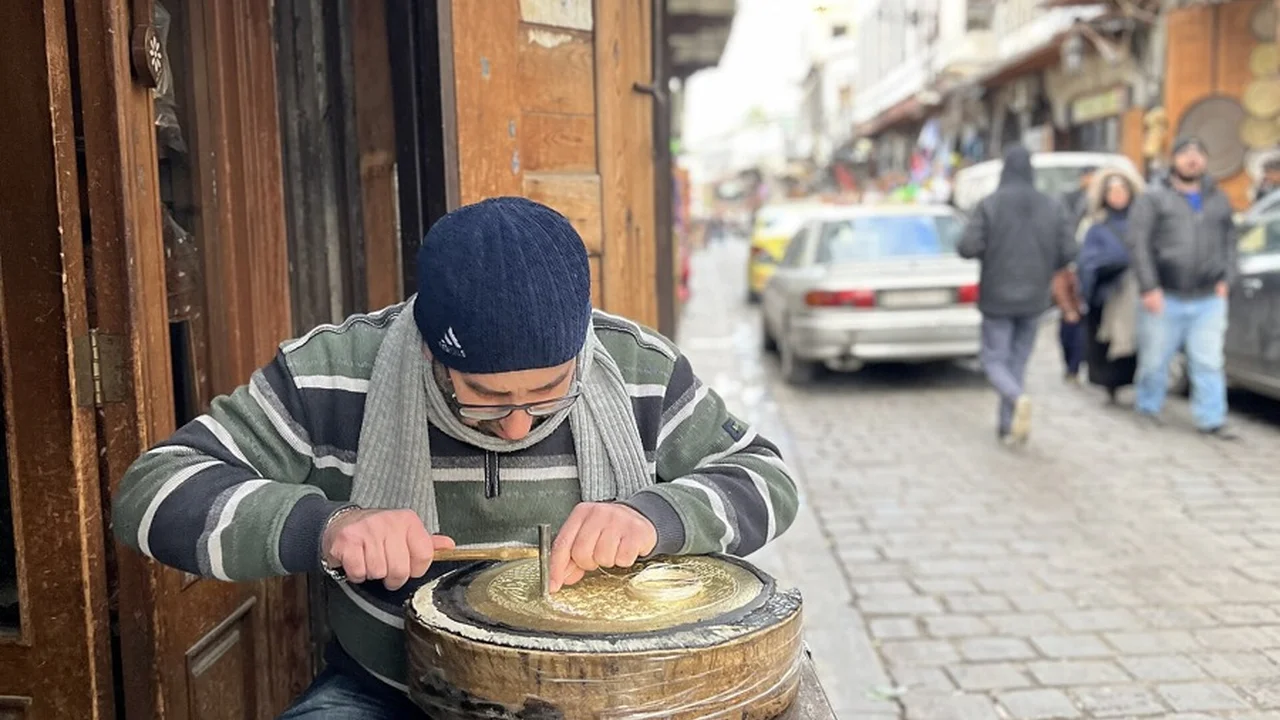
- Silver inlay on copper in Damascus, 2024 — Tmnadili / Wikimedia Commons · CC BY-SA 4.0. Cropped and resized; the photograph does not establish current conditions.
Refreshed slideshow license: CC BY-SA 4.0. Sources, authors and image licenses are listed above; cropped images and their segments retain the original or compatible license.