Syria’s START Reconstruction Fund: A Practical Guide for Investors
Rural road maintenance; illustration, not a documented fund project — AI-generated illustration by Bsouria; not documentation of an existing project.
When a business owner hears about a new reconstruction fund, the useful question is usually straightforward: where could my business fit? A Syrian investor wants to understand demand, finance and dependable partners. Someone investing from abroad needs to know who will deliver the work, how to start at a manageable scale and what must be checked before money moves. A meeting photograph and an optimistic headline cannot answer those questions on their own.
This guide reads the news through a business lens. It does not assume that funding is available to every project or attach invented returns to an opportunity. Instead, it turns a development worth watching into practical preparation. The aim is to help you recognise a suitable opening and decline an unclear proposal, even when the language around it sounds impressive.
What the announcement tells us
On 18 October 2026, SANA reported an agreement with the World Bank Group to establish Syria's START recovery and reconstruction fund, with an aim of encouraging private financing and investment. Application rules, eligibility and deadlines must be checked in the relevant official programme documents rather than inferred from the announcement.
Put this development on your watchlist, but do not enter an expected payment from it in your business budget. A public framework and a contract you can execute are different stages. Ask which organisation will publish programme information, where conditions will appear and what evidence would establish that a particular opportunity applies to your activity.
The distinction matters throughout this article. What follows is an editorial preparation framework, not a description of START's application requirements or a prediction that any particular industry will receive its support. Preparation can be useful without pretending that a financing decision has already been made.
Four stages between a headline and a contract
Keep four stages separate: an announced direction, a documented programme, a specific invitation and a signed agreement. The first helps you decide what to monitor. Programme documents explain an initiative's purpose. An invitation identifies the work and submission requirements. A contract establishes what the parties have actually committed to do.
Confusing those stages can lead a company to buy equipment or recruit staff before establishing whether it can participate. A maintenance business, for example, can update its portfolio after hearing about infrastructure investment. Purchasing a large inventory against an unissued order is a different decision. One is preparation; the other needs evidence of demand and a financing plan.
Create a short opportunity record containing the organisation, official link, review date, current stage and next action. If no invitation has been published, say so. “Under observation” is more accurate than “secured”, and protects suppliers, colleagues and prospective partners who might otherwise rely on your description.
Find the part your company can deliver
An investor does not always need to lead a large development from scratch. A smaller role may fit better: supplying a particular component, maintaining equipment, providing storage, preparing packaging or delivering a specialised professional service. These are examples for thinking about a supply chain, not a list of currently available contracts.
Begin with what you have. Can your team perform the work or does the proposal currently consist mainly of a trading name? Can you demonstrate quality, or do you need a first pilot? Is your advantage location, technical skill or a service customers struggle to obtain? A clear, limited capability is easier to explain than a promise to do everything.
A smaller business may consider working with an established contractor or manufacturer. Size does not remove the need to check a partner. Agree your scope, delivery standard, acceptance process and payment terms. A useful relationship needs details that remain understandable when schedules become tight and an unexpected problem appears.

Compare Syrian locations through actual operating needs
National coverage does not mean the same opportunity suits every governorate. Compare customer demand, available skills, services, suppliers and access to the intended market. An inexpensive site can become costly if transport and production stoppages absorb the saving. A more expensive site may make sense if it improves delivery or supervision.
Prepare a comparison of two or three locations using information you can verify. Record workable production hours, the cost of a sample shipment, access to replacement parts and your team's ability to reach the premises. Mark uncertain information and assign someone to check it rather than filling gaps with optimistic estimates.
An overseas partner can request this comparison and independently review selected assumptions. A Syrian business can use it to explain a location decision to a prospective investor. The conversation then concerns an operation that can function, rather than the reputation of a city or a promising photograph in a presentation.
Build a project file a stranger can understand
Start with one clear page
Answer six questions first: what do you sell, who buys it, what problem does it solve, what can you deliver now, what do you need next and how will you judge the pilot? If those answers are difficult to write plainly, organise the idea before producing a lengthy presentation.
Use selected evidence. A product sample, a short specification, a permitted reference or a documented delivery can be more useful than “extensive experience”. Do not use customer names, worker photographs or partner documents without suitable permission. Private information is not a substitute for credibility.
Keep supporting material separately: ownership structure, relevant registrations, team experience, site requirements and dated cost estimates. Share it in stages with appropriate recipients. A first enquiry does not justify circulating every company document. Remove unnecessary personal details and record which version you supplied, to whom and for what purpose.
Establish demand before looking for finance
Finance does not create a customer for an unwanted product. Ask who will pay, why they would choose your offer and what alternatives they already use. “The market needs this” is a starting hypothesis. A customer may recognise a need but require a lower quantity, different payment terms or support you have not priced.
Talk to a manageable group of prospective buyers and record comparable answers. Show a sample or specification and an indicative price. Ask about quantities, delivery expectations and objections. Distinguish politeness from interest, a request for quotation from a confirmed order, and a customer's preference from an actual commitment.
Where practical, test a limited offer before buying additional equipment. If repeat demand does not appear, reconsider the product or customer segment. That does not automatically invalidate the idea. It means expansion has not yet earned its evidence, and a small test has revealed something before a larger commitment made correction expensive.
Follow the cash, not just the margin
When do you pay, and when are you paid?
An order can show a healthy margin while the supplier struggles to meet wages because customer payment arrives later. Map the pilot's cash movement week by week: deposits, material purchases, transport, wages, testing and any amount retained until acceptance. A single total labelled “project cost” hides the timing problem.
Consider a fictional example using arbitrary accounting units, not Syrian prices. Sales of one hundred and direct costs of eighty do not make twenty immediately available. Payment may be delayed while overheads continue. Recalculate what happens if collection is late, a delivery is partly returned or new materials must be purchased before the previous order is paid.
Set a pilot spending limit that does not interrupt your existing operation. Do not quietly treat employee wages or unpaid supplier balances as your reserve. Discuss taxes, fees and records with an accountant familiar with the transaction. This example is a way to organise questions, not an individual financing recommendation.

Agree the roles of local and overseas partners
One partner may contribute a team, premises and market knowledge; another may bring equipment, finance or buyer relationships. Calling each contribution “support” leaves important questions unanswered. Is the money equity, a loan or an advance against production? Who owns the machinery? What happens if a promised contribution arrives late?
Write responsibilities in ordinary language. Who purchases, who signs, who authorises expenditure and who handles a delivery defect? How does each partner receive reliable reporting? A cross-border arrangement also needs legal and banking review appropriate to the countries, people and goods involved. Another company's experience cannot establish your own position.
When suitable, begin with a limited agreement that can be evaluated. Explain exit arrangements as carefully as entry: stock valuation, debts, customer obligations, ownership of files and use of the brand. Early clarity is usually easier than reconstructing intentions after a difficult season or a disappointing first contract.
Check the counterparty before committing
Ask for the correct legal name and evidence that the person negotiating can represent the organisation. Check relevant documents through appropriate channels and establish that the payment recipient matches the agreed party. A website, business card or active social account cannot establish authority or technical capability on its own.
Be cautious about someone using an international institution's name to promise approval or request a personal fee. Ask for the official announcement, programme conditions and contact route published by the institution itself. If an intermediary refuses to explain their role, pause payment until the position becomes clear.
Keep a dated correspondence trail. Share copies suited to the purpose rather than unrestricted originals, and control access to commercially sensitive information. Due diligence is not an accusation. It protects both sides from mistaken identities, misunderstood authority and expectations that nobody has written down.
Build the quotation from its components
Copying a competitor's price and adding an arbitrary margin can conceal losses. Build a cost structure covering materials, labour, measured waste, packaging, transport, inspection and after-sales obligations. Then include overheads and identify which assumptions may change between quotation and delivery.
Ask suppliers to specify price validity, quantity, delivery terms and included services. If sales and expenses use different currencies, examine how a movement would affect the order without claiming to predict exchange rates. Obtain appropriate advice on how price and payment terms should be expressed for the actual transaction.
A reserve should not conceal missing information. Explain each contingency, what would trigger its use and who can approve it. If a major cost remains unknown, an additional visit or a revised quotation may be wiser than pretending to have a final price. An attractive but unclear offer can become a commitment the business cannot honour.
Make quality and acceptance measurable
What counts as completed work?
“Excellent quality” does not specify a size, performance level, packaging method or test. Agree what will be measured, who will assess it and when corrections can be requested. If a certificate is required, verify its issuer, scope and validity. A logo in a sales presentation is not evidence that a requirement has been met.
Divide delivery into stages when the work supports that approach, with an understandable acceptance record for each stage. Test packaging and transport on a sample if damage could materially affect the order. Record how defects, returns and warranty enquiries will be handled rather than deciding the process again whenever a problem occurs.
A small supplier can build confidence through these habits without pretending to be a large corporation. Customers need early notice of delay and a workable response. An unrealistic delivery promise may win an initial order but damage the relationship afterwards. State capacity that your team can repeat in an ordinary working week.


Monitor purchasing opportunities through official channels
Your company's role might be supplier, subcontractor or project partner. When an invitation appears, read the actual document before choosing a route. Check the publishing organisation, reference, deadline, technical requirements and submission method. Review subsequent official clarifications rather than relying only on the first circulated notice.
Do not assume every institution uses identical procedures. Follow the specific organisation's guidance and the invitation's documents. If a social media summary conflicts with the official material, seek clarification through the stated channel. Do not send documents to an alternative address merely because someone promises a faster response.
Bsouria's business directory and opportunity pages can help you discover potential contacts. A listing is not a funder's endorsement or a guarantee of performance. Use it as a starting point for verification. This article neither announces a START tender nor accepts financing applications on behalf of any institution.
A practical ninety-day preparation plan
Use the first month to close important information gaps: customer conversations, capability checks, site visits and dated supplier quotations. Finish with a decision about one product or service to test. A growing folder is not progress unless it produces a choice about what to try, defer or investigate next.
In the second month, run a pilot at an affordable scale. Record actual labour time, waste, customer comments, delivery and collection. Avoid changing every variable simultaneously if you want to learn what caused the result. Assemble evidence with permission and revise specifications or pricing before seeking a larger order.
In the third month, compare expectations with results alongside your team and any prospective partner. Identify the required adjustment and additional capital, if justified. Expand because demand, delivery and collection are clearer, not simply because the news feels more positive. This is an adaptable planning example, not an official programme timetable.
Decide when to proceed and when to wait
Move into detailed evaluation when you can identify a customer, support your cost estimate, demonstrate capability, verify the counterparty and understand a workable payment route. Wait when the proposal depends on an undocumented promise or an assumption about permission. Waiting protects capital; it is not a verdict on an entire country's future.
Use a four-column decision sheet: what we know, its evidence, what remains unknown and who will resolve it. Review it briefly each week. Record stop conditions too: your maximum time and spending, essential documents and circumstances that would make the deal unsuitable despite an attractive headline margin.
You do not need to know the entire future. Separate information from expectation, reduce the uncertainties you can investigate and make commitments in stages. A fund announcement may deserve attention, but the strongest starting point remains work your company can demonstrate today. Prepare that evidence rather than waiting for a single opportunity to solve every business problem.
Questions investors ask
Is this an application notice?
No. It is editorial analysis and a preparation guide. Read any eventual invitation directly from its issuer. Do not send documents or pay fees in this article's name. A source link does not establish a partnership between Bsouria and the linked institution.
Must my company be large?
The relevant size depends on the role and the actual opportunity's conditions. A small supplier can investigate a specialised service, but should not assume eligibility. Describe one demonstrable capability and find an appropriate invitation rather than reshaping your claimed experience to fit every notice.
Is company investment the same as financing an order?
No. Ownership investment can involve governance rights and longer-term exposure. An order-financing arrangement concerns a particular delivery and collection cycle, depending on its terms. Have the structure reviewed rather than treating the labels as interchangeable or assuming the same guarantees apply.
What should I show an overseas partner first?
Explain the customer problem, offer, current capability, evidence, costs and proposed use of additional money. Say what the partner would contribute and what you bring. A clear short proposal is more useful than guaranteed returns or a long collection of photographs.
Does a directory listing verify a company?
No. Check legal identity, authority, documents, payment arrangements and capability separately. Establish that information is current and the correspondent is authorised. Respect the privacy of customers and partners when sharing references or discussing a prospective collaboration.
What can I do this week?
Choose one service, speak with prospective customers and request dated quotations from suitable suppliers. Estimate a small pilot and identify the missing fact that most affects your decision. Those steps remain useful even if no new financing programme opens soon.
Sources and official reading
- SANA: START fund agreement, 18 October 2026
- World Bank: project procurement information
- UK government: Syria business guidance; check its jurisdiction
Continue your research on Bsouria
Browse opportunities · Business directory · Read the other investor guide
Image sources and reuse
Photographs are dated in their captions, and conceptual scenes are identified. Archival images do not document current conditions or fund projects. Educational diagrams are by Bsouria.
- Rural road maintenance; illustration, not a documented fund project — AI-generated illustration by Bsouria; not documentation of an existing project.
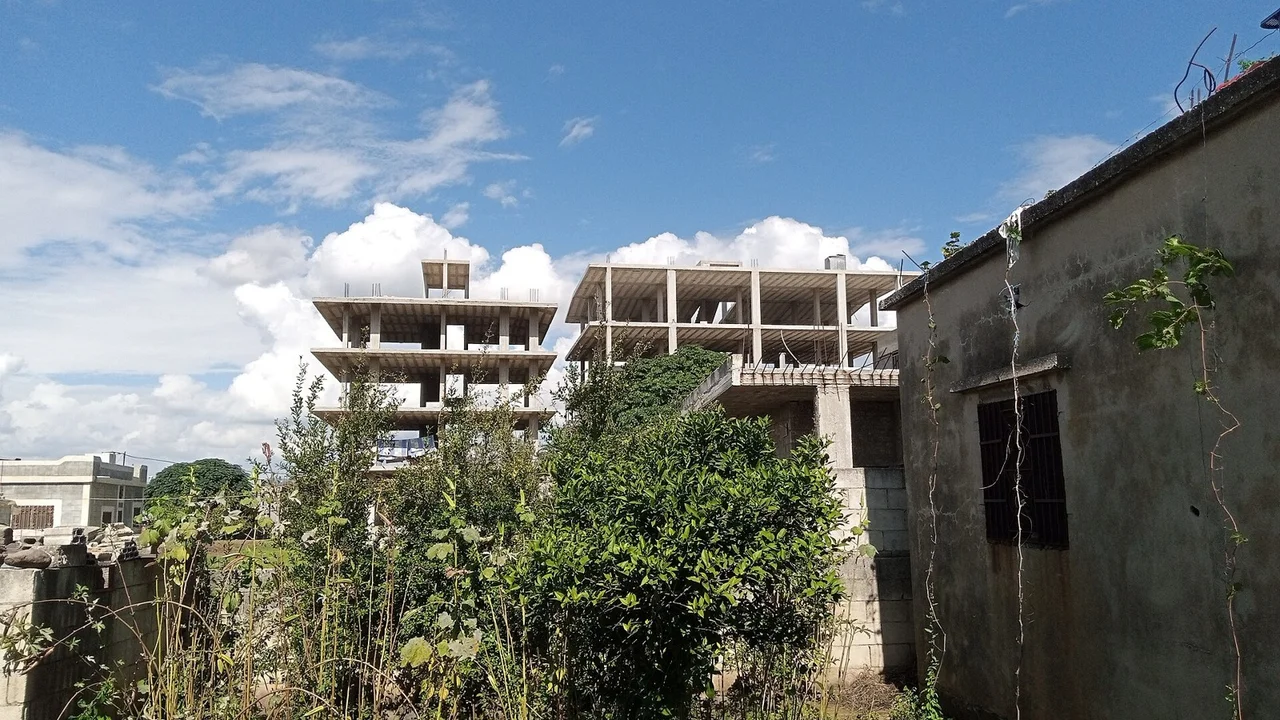
- Building in Umm Haratayn al-Gharbiya, Syria, 2023; context, not an announced fund project — Hayan Alhasan / Wikimedia Commons · CC BY-SA 4.0. Cropped and resized; the photograph does not establish current conditions.
- Tractor in Syria, archival photograph from 2010; not documentation of fund investment — Bernard Gagnon / Wikimedia Commons · CC BY-SA 3.0. Cropped and resized; the photograph does not establish current conditions.
Refreshed slideshow license: CC BY-SA 4.0. Sources, authors and image licenses are listed above; cropped images and their segments retain the original or compatible license.